

In 5 articles, you’ll get a deep dive of Kinsale Capital Group (~100 pages).
It will be structured in five Parts plus one additional fundamental piece:
Part 1: Insurance 101 and E&S playground
Part 2: Regulation: Why E&S looks the way it does
Part 3 (today): Kinsale’s Business Model
Part 4: The Kinsale machines: Understanding the Financials
Part 5: Compounder?
“The Fundamentals”: Reinsurance 101
All parts are now available in one PDF. You can download it below.

👔 Company Name: Kinsale Capital Group (“Kinsale”)
🔎 ISIN: US49714P1084
🔧 Business model: Specialty insurer (Excess & Surplus lines)
🌍 Geographic exposure: United States
📈 Stock Price: $393
💰 Market Capitalization: $9.1 billion
👨💼 Number of CEOs since foundation: 1
👨👩👦 Founder-/Owner-operator: Yes
📅 CEO tenure: Since 2009
🥇 Insider ownership: 5.5% of shares
📊 10Y EPS CAGR: ~41%
🔁 Reinvestment profile: High (float-funded growth)
💸 Capital intensity: Capital-light
🏰 Moat: Specialization, Focus, Technology & Cost Advantage
🧨 Main risks: Cyclicality, Broker concentration, Investment risk, Reserve adequacy, Regulatory risk
🌳 Slow Compounding fit: Yes – high-quality underwriting, long growth runway
Business Model in a Nutshell: Kinsale is a U.S. specialty insurer focused 100% on commercial Excess & Surplus Lines, insuring hard-to-place risks that standard carriers decline. The company runs a high-volume, low-hit-rate underwriting model, supported by a proprietary tech platform that lets underwriters quote small and mid-sized accounts quickly and selectively. Economics are driven by disciplined underwriting (combined ratio mid-70s) and float-funded investment income.
1. How Kinsale makes money in practice
By now, we have looked at the playing field (the U.S. E&S market), the rules of the game (regulation). I will publish a separate “The Fundamentals” post to explore the basics of reinsurance in a couple of days.
In this part, we turn to the engine room: how Kinsale’s business model, underwriting, distribution and balance sheet actually come together to generate cash and compound value over time.
Economically, Kinsale has two profit engines.
The first is the underwriting result: premiums collected minus losses and operating expenses.
The second is investment income on the float – the premiums collected today that will only be paid out as claims in the future. When both engines run well at the same time, the result can be powerful operating leverage.
The primary goal of Kinsale’s management is to create long-term shareholder value through growth and the achievement of attractive returns.
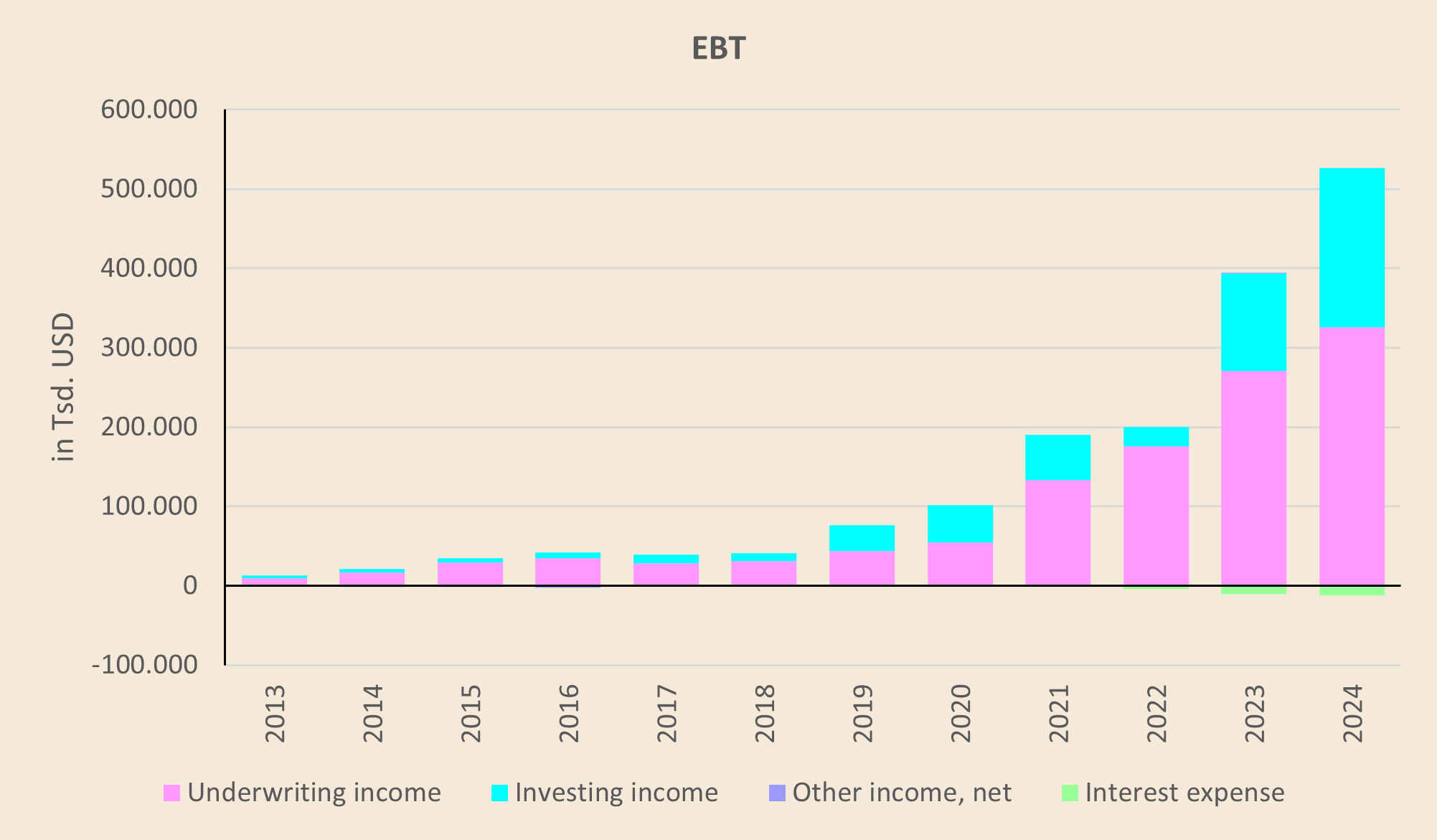
Although Kinsale only went public in 2016, the underlying business has been in operation since 2009. Between 2013 and 2024, underwriting earnings before tax (EBT) increased more than 30x, investment EBT around 60x and total EBT more than 40x. These numbers already tell us that this is not a typical insurance company growing at GDP-plus. The rest of this part unpacks what sits behind these figures.
2. Building the engine: Kinsale’s business model
2.1. Origins and group structure
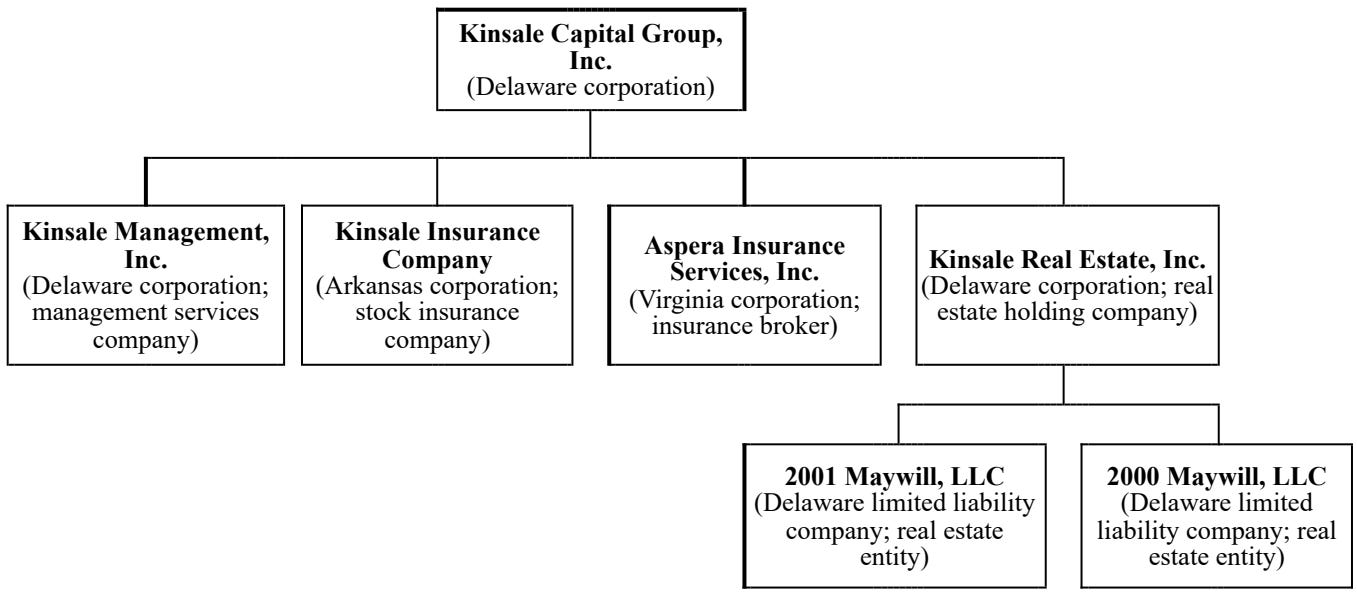
Kinsale traces its roots back to 2009, when Kinsale Management, Inc. was established as a management company providing services to U.S.-based insurance operations. The initial holding company was incorporated in Bermuda under the name Kinsale Capital Group, Ltd. In 2014, the group re-domiciled to Delaware and adopted its current name, Kinsale Capital Group, Inc. (KCGL).
The main operating insurer is Kinsale Insurance Company, which writes the group’s U.S. E&S business. Kinsale Insurance Company was acquired in early 2010 and is headquartered and authorized in Arkansas.
Over time, Kinsale has added a small number of specialized subsidiaries.
Aspera Insurance Services, Inc., acquired in 2013, operates as an inhouse wholesale broker with licenses in more than half of the U.S. states. Two real estate entities, Kinsale Real Estate, Inc. and 2000 Maywill, LLC, were created to own the company’s headquarters and additional investment property. The structure is simple: one focused E&S carrier, a distribution arm and a modest real estate sleeve around the core.
Throughout this development, the strategic focus has remained the same: Kinsale is a specialized E&S insurer focused on small and mid-sized commercial risks in the United States. It does not run a large admitted business, does not operate outside the U.S. and does not own a traditional retail distribution network. The group is built around a single idea – underwriting complex, hard-to-place risks in a disciplined way – and the organizational design reflects that.
2.2. Product portfolio and risk appetite
Kinsale operates exclusively in the E&S segment. It focuses on risks that are too unusual, too small or too operationally complex for standard carriers to handle efficiently. The portfolio is deliberately diversified across many classes of business, but almost all of them share three features: they are commercial rather than personal, they involve non-standard risks and they require specialized underwriting judgement.
On the property side, Kinsale writes commercial property and small business property for manufacturing, hospitality, retail, entertainment venues and other occupancies with elevated risk characteristics. It also offers homeowners’ policies for manufactured homes in catastrophe-exposed areas and high-value homeowners’ coverage for primary and excess layers on homes above one million dollars in value.
The casualty portfolio is broader. It includes excess casualty business sitting above primary liability policies, small business casualty and construction liability, general casualty and liquor liability, products liability for a wide range of consumer and industrial products, various professional and management liability classes, allied health and health care liability, environmental liability and specialized segments such as entertainment, energy, life sciences, public entity, commercial auto, inland and ocean marine, product recall and railroad liability. The common theme is that these exposures are heterogeneous and often involve higher-severity, lower-frequency losses.
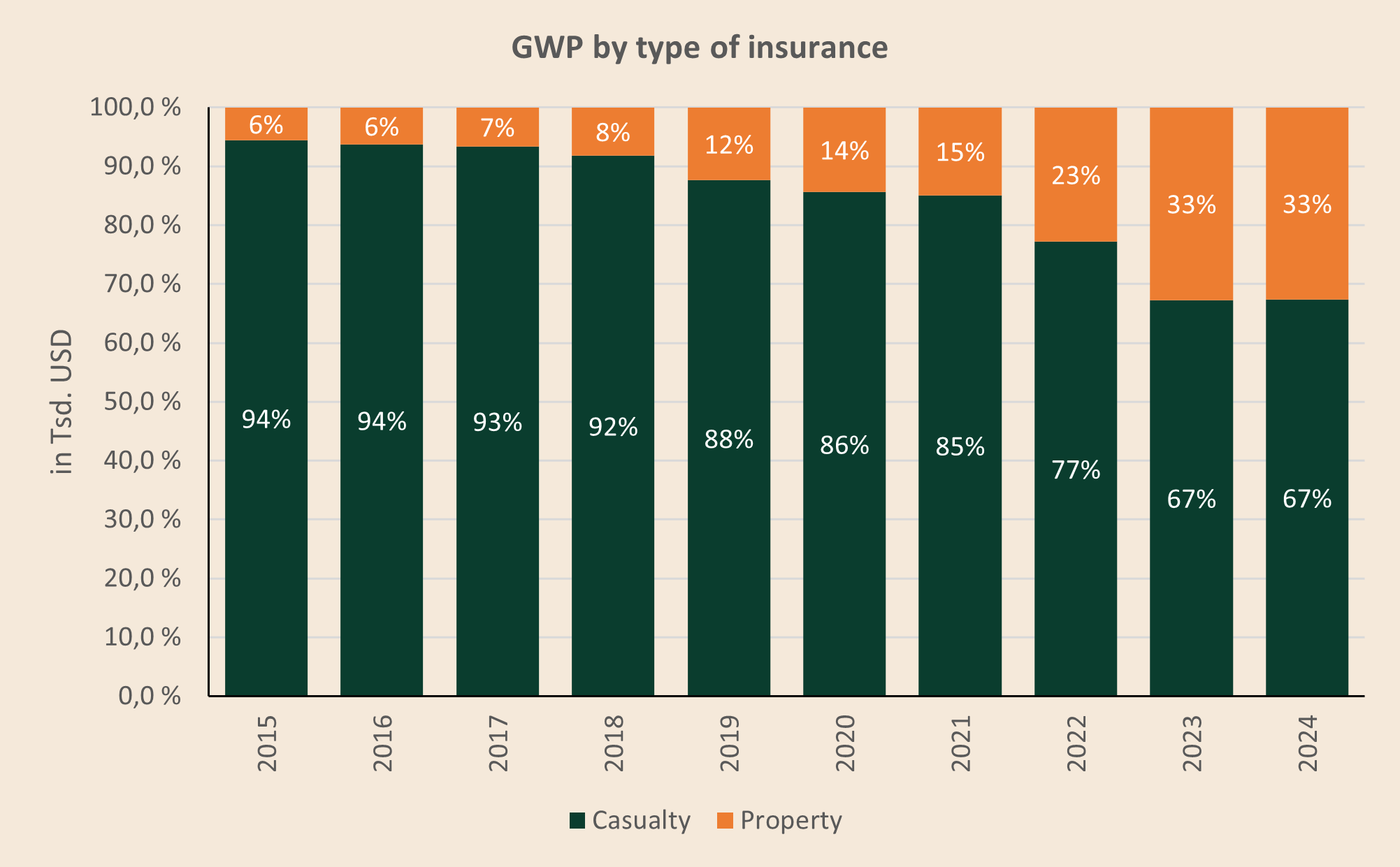
Over the last few years, property outgrew casualty.
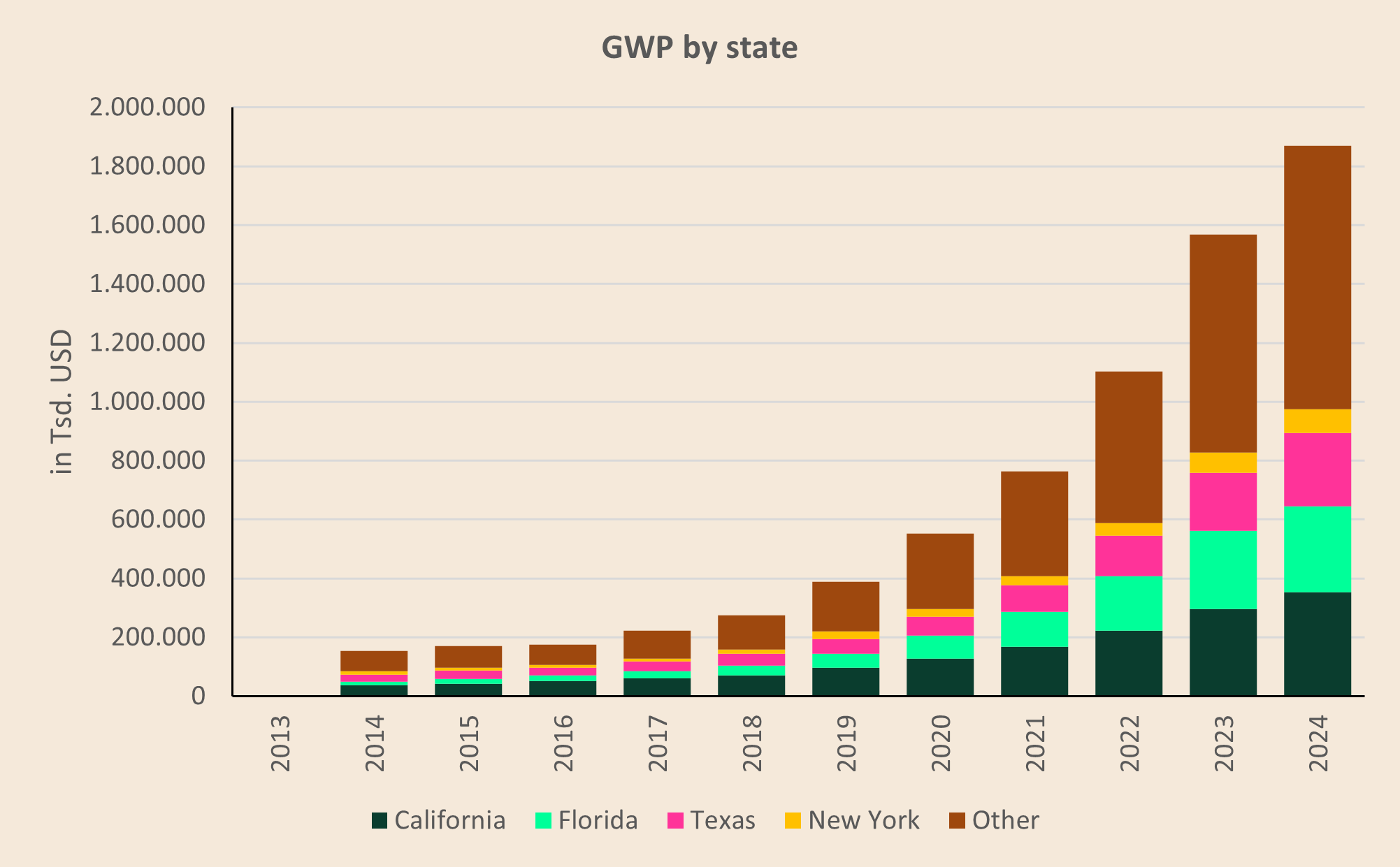
Geographically, Kinsale writes business across all 50 states, but economic activity and risk exposure are not evenly distributed. California, Florida and Texas are particularly important contributors to gross written premium (~52%), reflecting their size, economic diversity and – in the case of Florida and parts of California – elevated natural catastrophe risk.
2.3. The underwriting engine: submissions, selectivity and average premium
Kinsale’s underwriting model is built around high submission volumes and low conversion rates. The company deliberately sees far more opportunities than it writes selectively.
„If our underwriters cannot conclude that they can bind coverage at a combination of premium and terms that meet our standards, they are encouraged to quickly move on to another potential opportunity.”
(IPO Prospectus)
Gross written premiums (GWP) is a key term used in the insurance industry. GWP represent the amounts that Kinsale has written or assumed on insurance policies during a given period. The level of gross premiums in any period is essentially driven by four factors:
The number of inquiries for new policies
The conversion rate of those inquiries into bound policies
The renewal of existing contracts, which implicitly reflects the retention rate, and
The average premium per policy
The following section takes a closer look at these growth drivers.
New customer growth. In 2024, Kinsale received roughly 881,000 submissions for new insurance policies. Only a small fraction of these submissions were ultimately bound as policies. The rest were either declined or not quoted. Over time, the number of submissions and the number of quotes have both grown substantially, illustrating Kinsale’s increasing relevance to brokers and its ability to process a large flow of opportunities through its systems. The conversion rate is the ratio of bound policies to new business submissions. It increased from 5.7% in 2015 to 7.3% in 2024.

Retention rate / Churn. Retention rates are also an important part of the equation. It indicates how many customers remain with a company after a certain period. For instance, if 80 % of customers are still with the company after two years, the churn rate (customer attrition) is 20 %. Put simply, before a company can grow, they need to replace the lost customers.
Because Kinsale focuses on complex risks where standard carriers often have less appetite, it can achieve attractive retention even as it maintains underwriting discipline. The combination of disciplined new business selection, solid retention and rising average premiums has been a key driver of sustained growth in gross and net written premiums.
Since both gross written premiums and the average premium per policy (see below) are disclosed, it is possible to approximate the number of active policies. Combined with the reported number of new policies, this also allows an estimate of attrition.
In 2024, for example, Kinsale issued ~64,000 new policies. At the same time, ~43,000 policies lapsed without renewal (Kinsale typically writes annual policies with an option to renew). The net result was an increase of ~21,000 policies, corresponding to policy count growth of roughly 20% year over year.
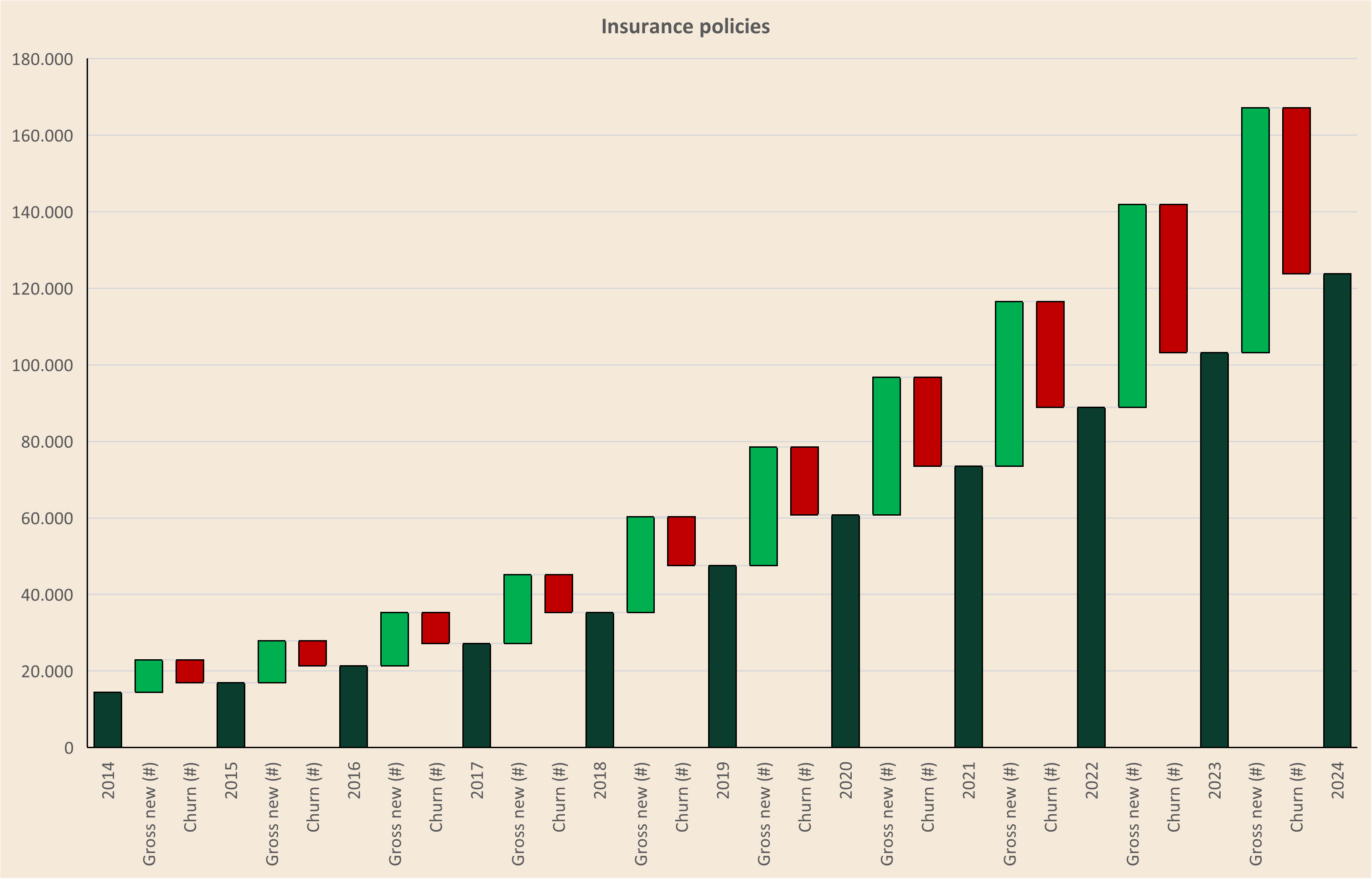
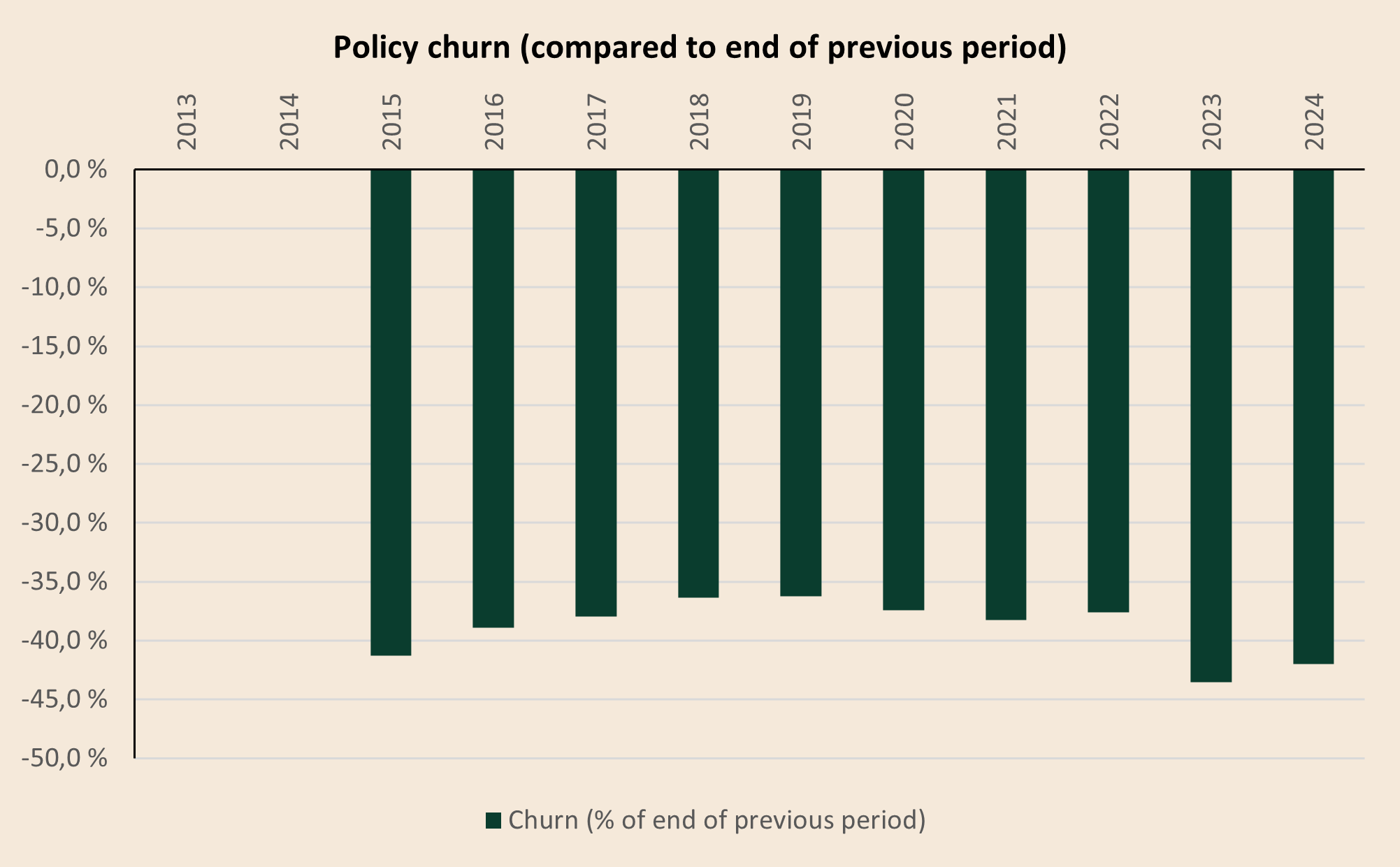
On this basis, the self-calculated churn rate has been relatively stable over the past nine years, at around 37–42%. Management has described this back-of-the-envelope calculation as “reasonable”. Kinsale itself states that approximately 66–75% of expiring policies are renewed, implying a churn rate of 25–33%. The self-calculated churn is therefore somewhat higher, but broadly consistent with the company’s own disclosures.
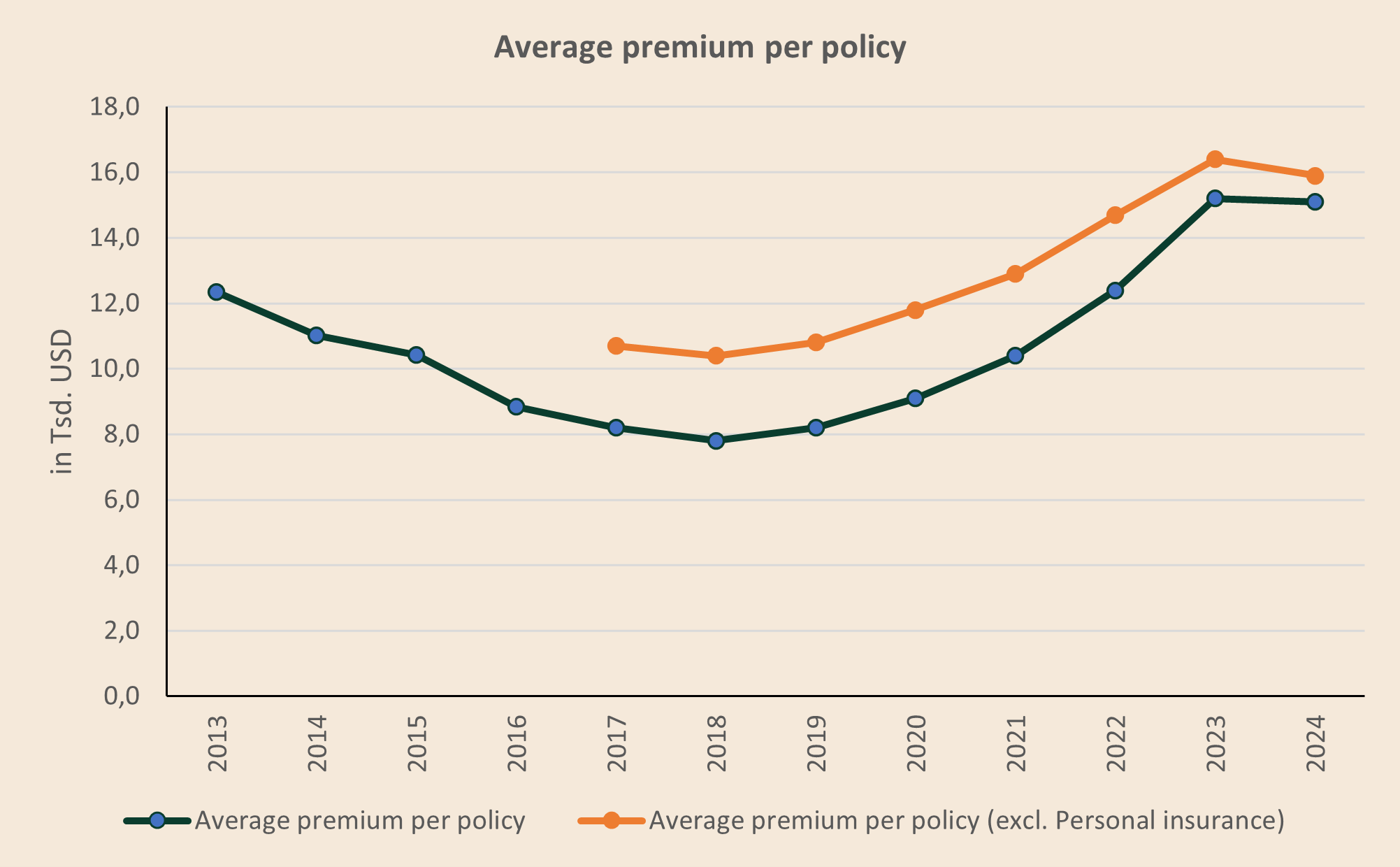
Average Premium Volume. Kinsale focuses primarily on small to mid-sized commercial accounts. In 2024, the average premium per policy was around 15,000 dollars, excluding the personal insurance segment. Over time, the average premium declined from the early years to a trough around 2018, as Kinsale broadened its footprint in smaller accounts, and has since increased again as rate levels rose and exposure sizes grew due to the fact that property outgrew casualty, as property premiums typically exceed that of casualty policies by a significant margin.
2.4. Distribution and broker relationships
Kinsale distributes its products almost exclusively through independent wholesale brokers. It does not grant underwriting authority to these brokers. All underwriting decisions remain with Kinsale’s own underwriters. This is a deliberate choice: Kinsale retains full control over pricing and claims processing in-house, unlike other insurers who have partially outsourced these functions, as evidenced by the growing market share of MGAs.
By keeping these two critical functions under its control, Kinsale ensures consistency, quality and lower broker commissions, as MGAs typically demand higher commissions because their scope of duties exceeds that of independent brokers.
The broker network comprising ~200 brokers at the end of 2024 has expanded over time, but there is still meaningful concentration among the largest producers. The single largest broker, RSG Specialty, LLC, accounts for around one-fifth of GWP. The top five brokers together place more than 60% of Kinsale’s business. This concentration is not unusual in the E&S market, where a handful of large wholesale intermediaries dominate distribution. It does, however, create a degree of supplier concentration risk: if a major broker were to change its placement preferences, the impact on volumes could be significant.
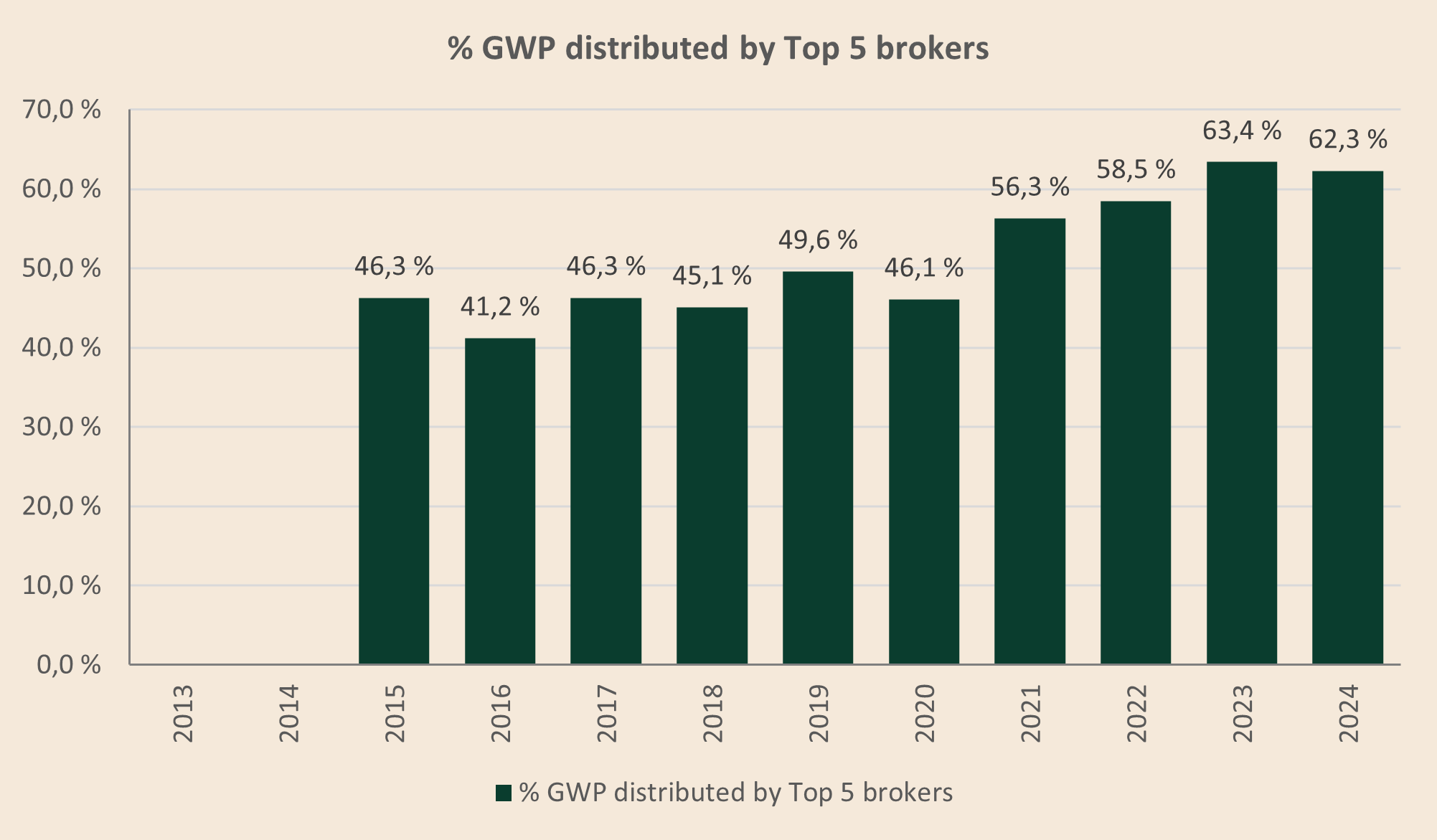
Kinsale manages this risk in two ways. First, it continues to broaden the broker base by adding new relationships. Each broker office is assessed individually, as if it were an independent firm, with performance and behaviour monitored over time. Second, by keeping underwriting authority in-house and building a reputation for responsiveness and reliability, Kinsale positions itself as a preferred market for brokers in its chosen niches. This has translated into rising submission flow.
A typical sales process for an E&S policy runs through several layers of intermediaries. A simplified sequence looks like this:
A commercial client approaches a retail broker with a specific coverage need, for example property insurance for a building with unusual risk characteristics.
Because the risk does not fit standard admitted products, the retail broker turns to a wholesale broker to access the E&S market (after diligent effort, compare Part 2 of this Deep dive series).
The wholesale broker prepares a submission and sends it to several E&S carriers – for example Kinsale, Berkshire, AIG, Markel and others.
The E&S insurers review the submission, decide whether they are interested and, if so, respond with quotes that specify pricing, limits, deductibles and key terms.
The wholesale broker compares the quotes, discusses options with the retail broker and the client and, once the client agrees, binds coverage with the chosen E&S carrier.
Premiums are then paid to the insurer, usually via the broker chain.
The brokers receive a commission and collect insurance premium taxes
2.5. Claims handling and reserving culture
Claims handling is the other side of the underwriting coin. As of the end of 2024, Kinsale’s claims department consisted of roughly ninety claims professionals with substantial experience in complex commercial lines. Claims management is kept in-house, mirroring the company’s approach in underwriting. There is no reliance on third-party claims administrators for core business.
Kinsale describes its reserving philosophy as conservative. Claims reserves are set using actuarial methods and management judgement, informed by internal data and external benchmarks. The company emphasizes the importance of avoiding under-reserving, particularly in long-tail lines where claims may take many years to develop. This cultural stance becomes visible in the behaviour of prior-year development, which we will analyze in detail later in this part.
2.6. Technology and data as an operating advantage
A key part of Kinsale’s edge lies in its technology stack. At the end of 2024, the IT department employed around 130 people. The Chief Information Officer has more than three decades of experience in the technology sector. Most of the core systems that support underwriting, policy administration and claims handling have been developed in-house.
The insurance subsidiary operates on a browser-based platform that integrates underwriting, rating and policy issuance. This reduces manual data entry and eliminates many of the hand-offs that characterise legacy systems in traditional carriers. Electronic files are maintained for every account, and key data fields are captured in a structured way, enabling consistent analysis and reporting.
On top of this, Kinsale has built a data warehouse that aggregates information from underwriting, claims and finance. This infrastructure allows flexible queries, dashboards and ad-hoc analyzes, supporting both day-to-day decision-making and longer-term portfolio management. For a company competing in a market where pricing and risk selection are the main levers, the ability to analyze its own data quickly and accurately is a tangible competitive advantage.
2.7. Investments and float – the second profit engine
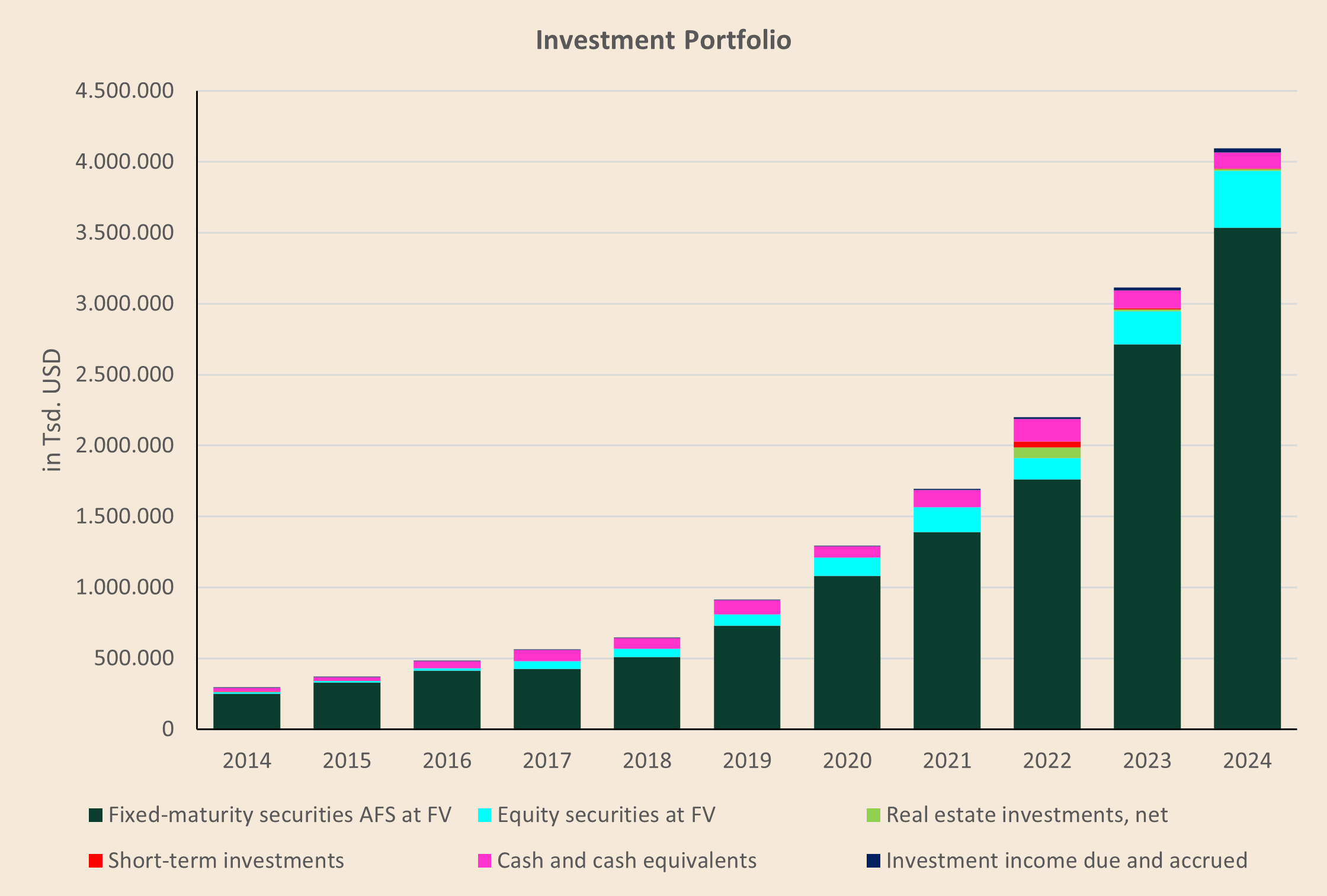
As with any insurer, there can be years between the receipt of premiums and the payment of claims. During that time, Kinsale invests the float. Investment income, together with realized and unrealized gains and losses, represents the second pillar of the company’s earnings profile alongside underwriting.
Kinsale invests the bulk of its portfolio in high-quality fixed-income securities. The investment committee of the Board sets risk parameters, including limits on credit quality, sector and duration. Internal investment guidelines require the portfolio to maintain a strong average credit rating, and the company emphasizes capital preservation over yield maximization. Smaller allocations to equities, real estate and other asset classes provide some additional return potential but remain modest relative to the fixed-income book.
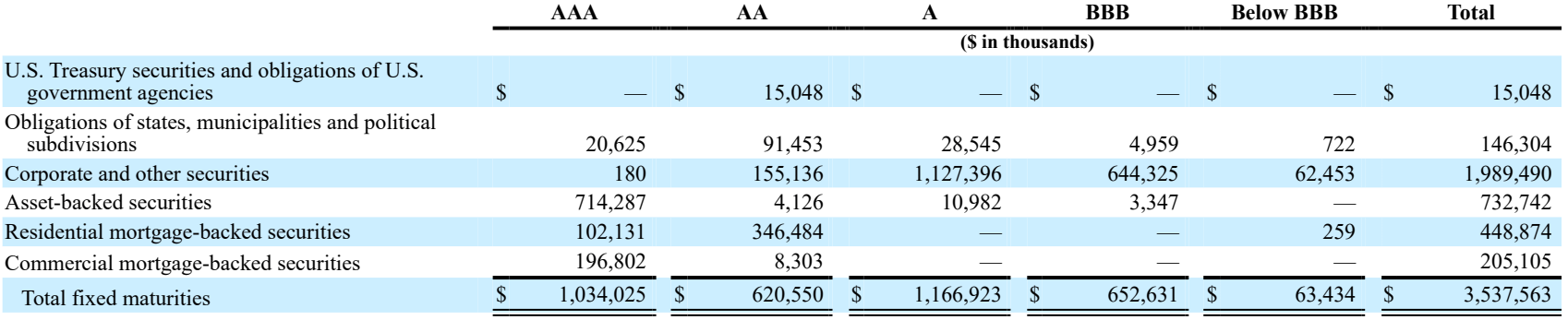
The combination of a growing underwriting float and a conservative investment style results in steadily rising investment income without taking equity-like risks on the asset side. The details of the investment portfolio and its contribution to earnings are discussed further below when we look at Kinsale’s balance sheet and cash flows.
3. Kinsale’s reinsurance programme and philosophy
3.1. Programme architecture: quota-share plus excess of loss
Kinsale’s reinsurance programme is built around a combination of proportional and non-proportional treaties. The company uses quota-share reinsurance to share a portion of premiums and losses with reinsurers and excess of loss (XoL) protection to cap large individual losses and catastrophe events. The exact mix varies by line of business, but the overall logic is consistent: retain a meaningful share of well-understood, profitable risks while protecting the balance sheet against tail events.

Management renews the reinsurance programme annually. At each renewal, Kinsale reassesses its own risk appetite, claims experience, growth expectations and the cost and availability of reinsurance capacity. Retentions and cession rates are adjusted in light of these factors, allowing the company to lean into growth when terms are attractive and to pull back when reinsurance becomes more expensive.
3.2. Counterparty quality and reinsurance receivables
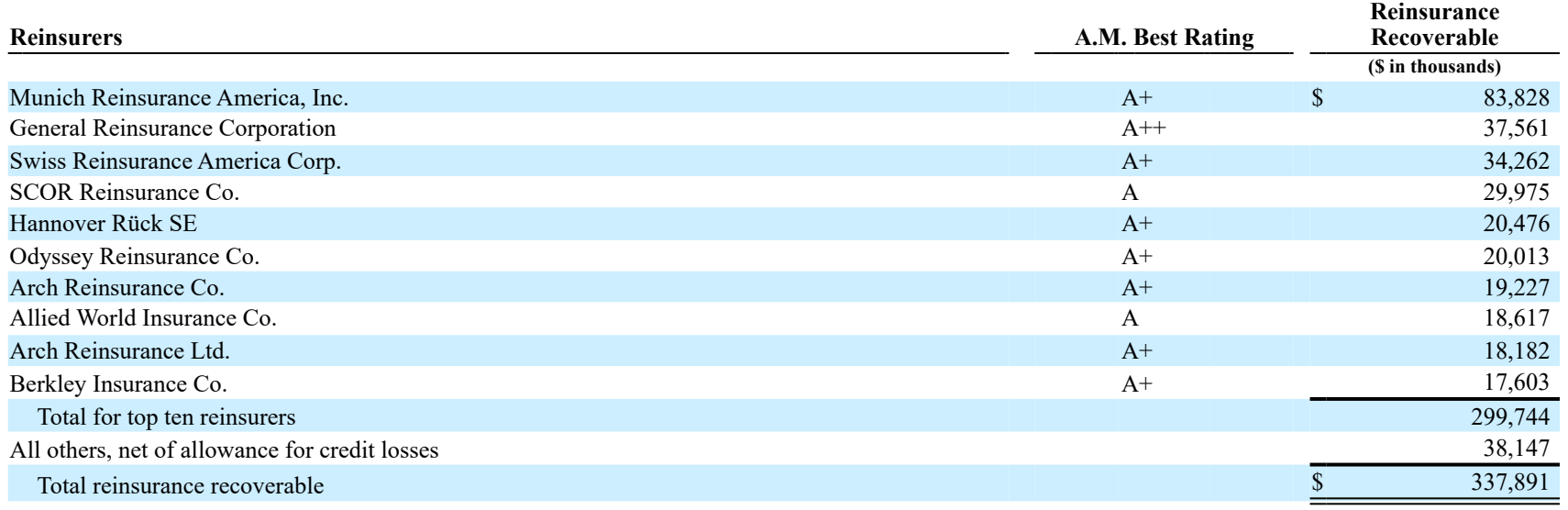
Reinsurance transfers risk, but it also introduces counterparty exposure: the cedent must be confident that reinsurers will pay when large losses occur. Kinsale manages this risk by dealing only with reinsurers that have strong financial strength ratings. According to company disclosures, Kinsale’s reinsurance panel consists of counterparties rated “A−” or better by A.M. Best (i.e. excellent or stronger).
As Kinsale has grown, the absolute size of its reinsurance recoverables has increased in line with the business. These recoverables represent amounts due from reinsurers for their share of incurred or expected claims. The company monitors exposures by reinsurer and rating category and discloses the distribution of reinsurance receivables across its panel. This diversification, combined with the use of highly rated partners, reduces the likelihood that a reinsurer default would materially impair Kinsale’s balance sheet.
3.3. Impact of reinsurance
Reinsurance affects underwriting income through three main channels:
Ceded premiums – Parts of the original premium are ceded to reinsurers. This reduces gross written premiums and, all else equal, lowers underwriting income.
Ceded losses and LAE – When claims occur, reinsurers reimburse their share of losses and loss adjustment expenses. This lowers reported loss and LAE expenses and supports underwriting income.
Ceding commissions – For proportional treaties, reinsurers pay ceding commissions to the cedent. These commissions partially offset acquisition and administration costs and therefore increase underwriting income.
The interaction of these three elements determines the net impact of reinsurance on EBT. In benign years with low losses, ceded premiums and commissions tend to result in a net cost to the cedent. In adverse years with large losses, recoveries from reinsurers can more than offset the ceded premium cost and stabilize earnings.
The chart below illustrates this dynamic based on a self-constructed time series:
The pink line shows the reported underwriting income after reinsurance.
The green bars show underwriting income before reinsurance, i.e. as if Kinsale had retained 100% of premiums and losses.
The purple bars represent the net impact of reinsurance on EBT – the combined effect of ceded premiums, ceded losses and LAE, and ceding commissions.
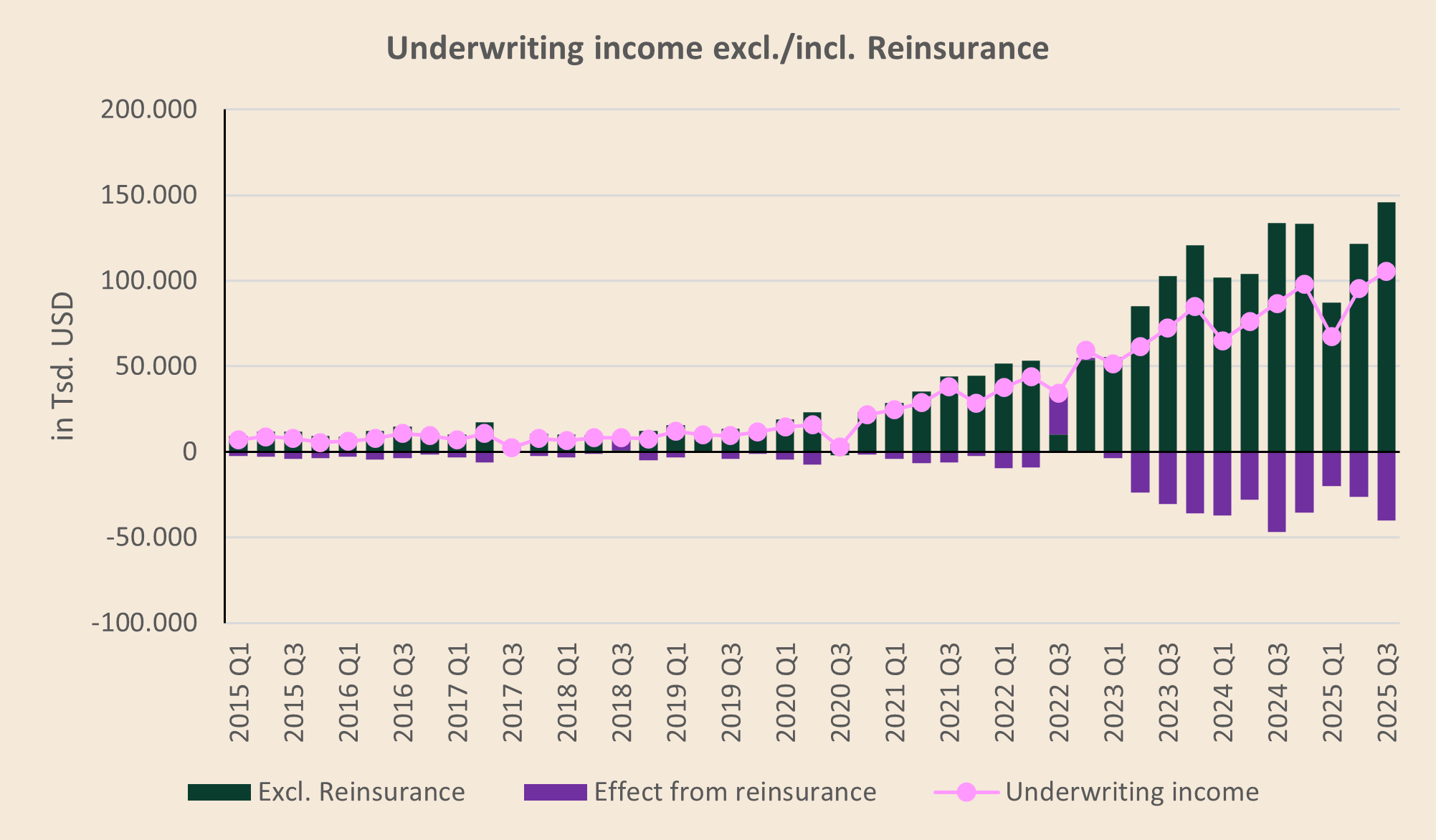
The smoothing effect of reinsurance becomes visible around Q3 2022, when the purple bars are strongly positive: large losses were partially absorbed by reinsurers, so reported underwriting income (pink) is materially higher than the pre-reinsurance level implied by the green bars. In Q3 2022 Kinsale had the following effects:
Ceded premiums:$45.6 million, reducing profit/loss
Ceded losses and LAE: $56.2 million, increasing profit/loss
Ceding commissions: $12.9 million, increasing profit/loss
Total net impact: +$12.9 million
Over the full period, however, the net contribution of reinsurance is negative – it reduces cumulative underwriting income but protects the company from severe downside in stress periods.
In other words, Kinsale deliberately accepts a structural earnings drag from reinsurance in “normal” years in exchange for capital protection and volatility reduction when large losses occur.
In Part 4, we’ll look at the financials of Kinsale in detail.
I'm really enjoying this deep dive. I bought a handful of shares in 2018 but never averaged up unfortunately! Keep up the good work. Are you also interested in other specialty insurers like Markel?