

The Teqnion investment case can be simplified into three buckets: the good, the bad, and the M&A machine.
The good bucket consists of subsidiaries that already generate attractive margins and compound steadily.
The bad bucket contains the companies that have weighed on group profitability and require operational improvement.
The M&A machine allows Teqnion to redeploy capital into profitable niche businesses at attractive prices.
Q1 2026 was encouraging because all three buckets moved in the right direction.
Q2 suggests that Q1 may not have been a one-off. One quarter does not make a trend, and, strictly speaking, neither do two. However, two consecutive quarters pointing in the same direction can be an early indication that a trend is beginning to form. The next few quarters will show whether the underlying investment thesis was correct.
This is particularly relevant because Teqnion’s valuation remains depressed, as discussed later in this article. That creates an attractive setup: if subsequent quarters confirm the trend and sentiment begins to improve, the company could benefit not only from continued earnings growth but also from a narrowing of its valuation discount to more proven serial acquirers.
To sum up the setup: Teqnion has now delivered a few consecutive quarters of improving underlying performance. The weaker Swedish portfolio is recovering, the higher-quality international businesses continue to grow, and the latest acquisitions appear to be both more profitable and acquired at attractive valuations.
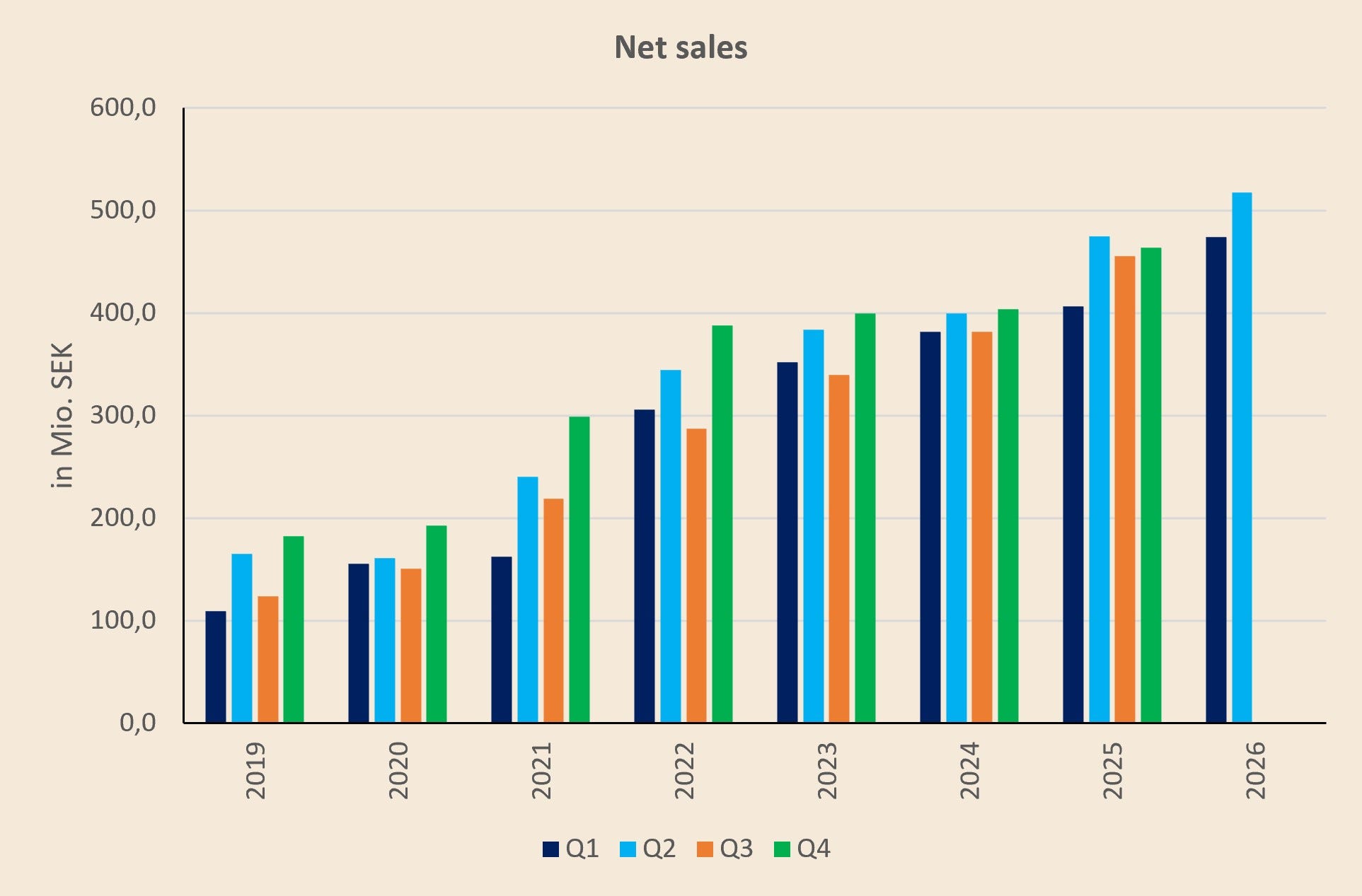
At group level, net sales increased by 9% to SEK 517.9m, surpassing SEK 500m in quarterly revenue for the first time.
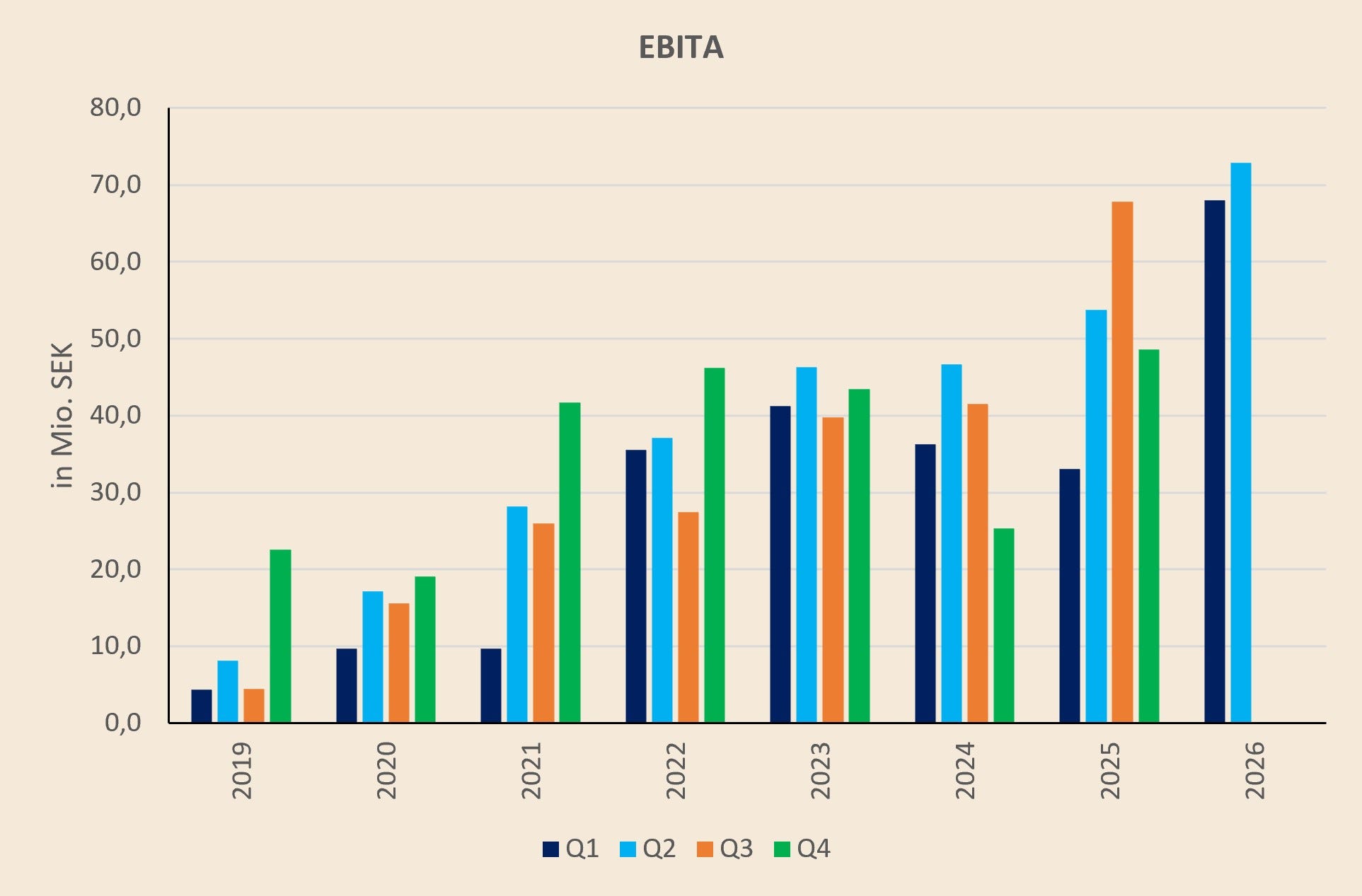
Reported EBITA increased by 36% to SEK 72.9m…
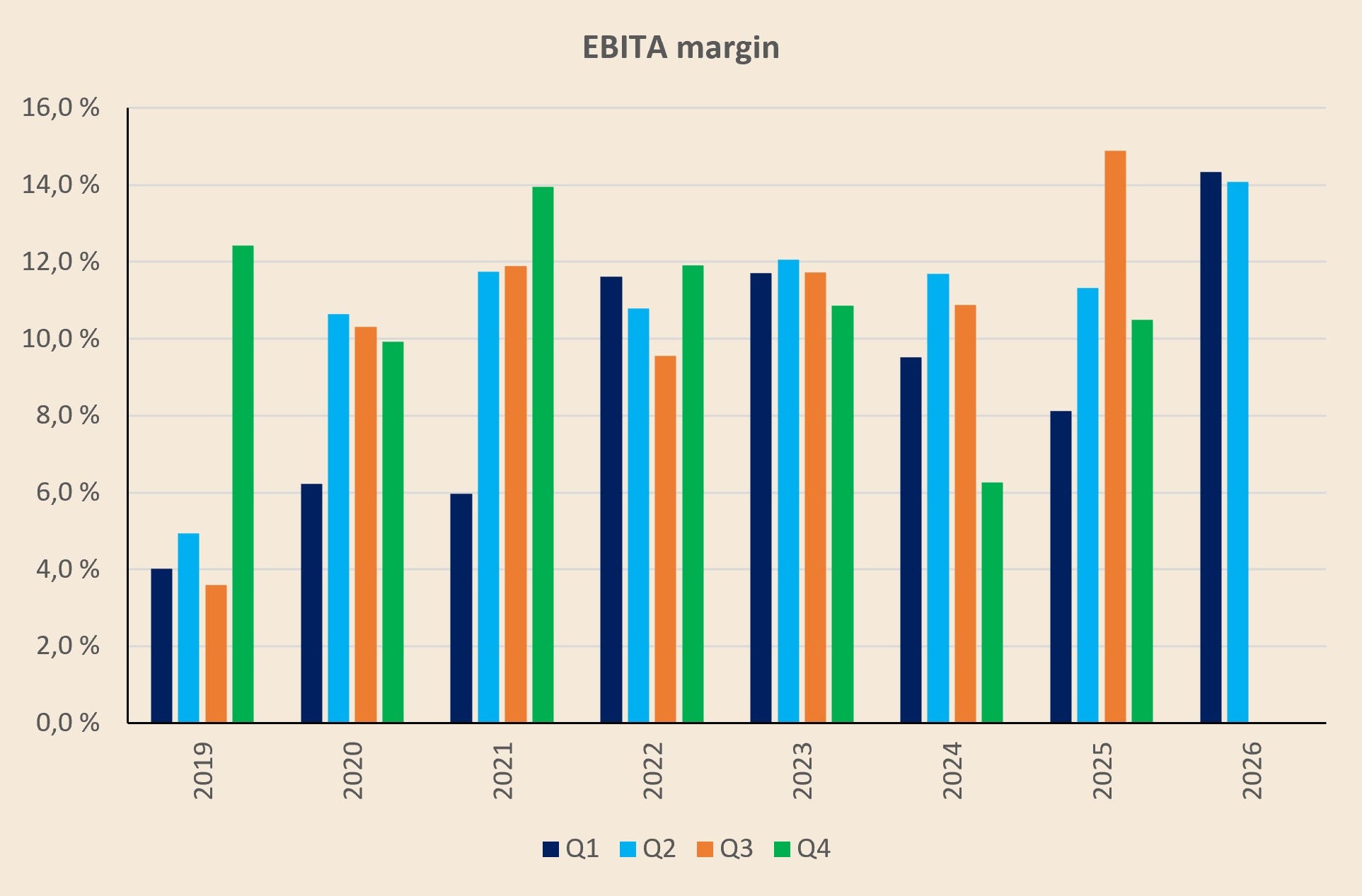
…while the EBITA margin rose from 11.3% to 14.1%. This was the highest Q2 EBITA and one of the strongest quarterly margins Teqnion has reported since its listing.
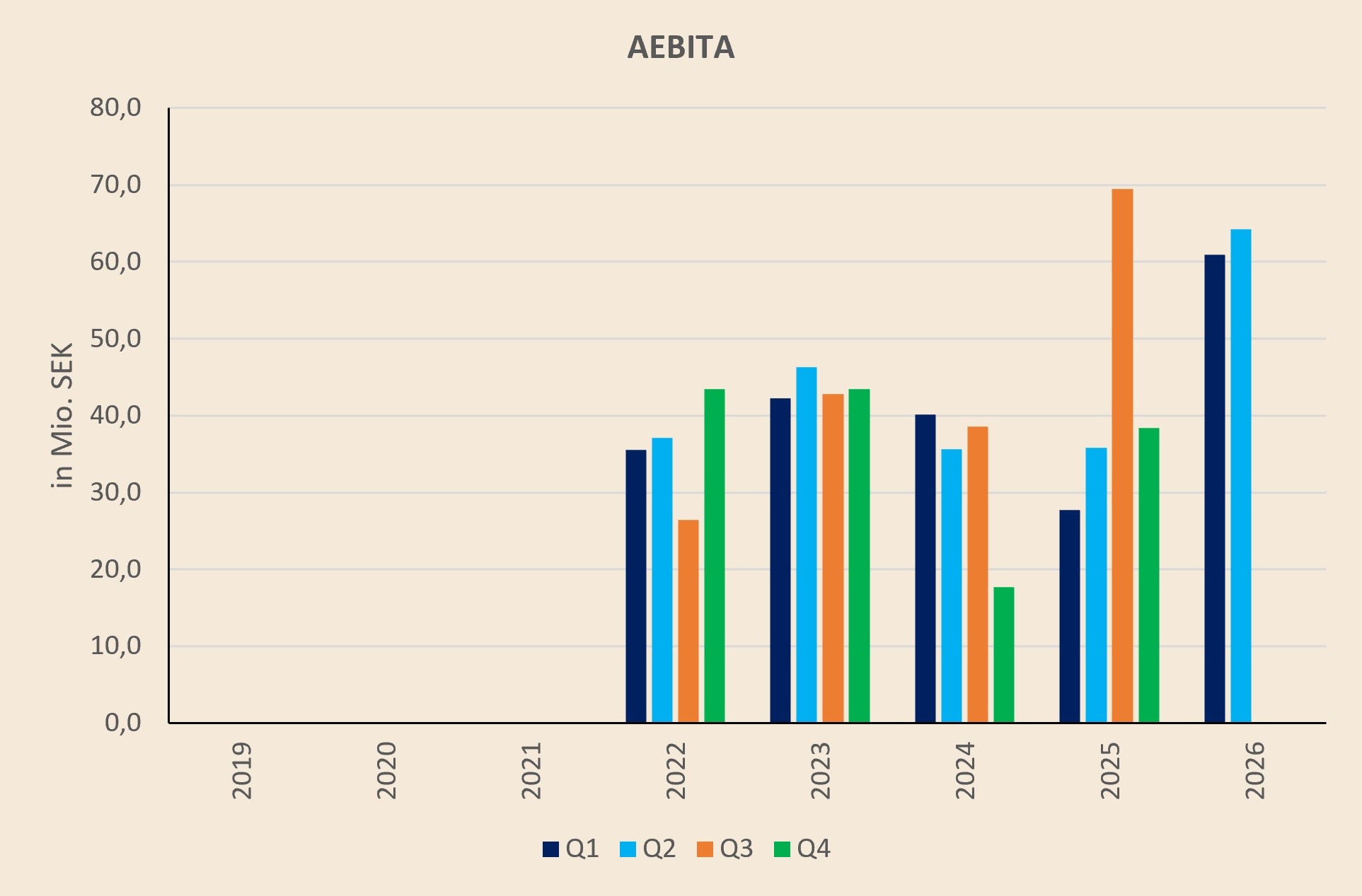
The reported development is already strong, but it still understates the improvement in underlying profitability.
Both periods contained positive non-cash effects from the revaluation of contingent considerations. However, Q2 2025 benefited from a considerably larger positive revaluation than Q2 2026. Excluding these accounting effects, adjusted EBITA increased by 79% (!), providing a much clearer picture of the underlying operational development.
Teqnion’s own bridge reaches a similar conclusion. After removing currency effects and earn-out revaluations, underlying profit before tax increased from approximately SEK 26m to SEK 54m, or by 106%.
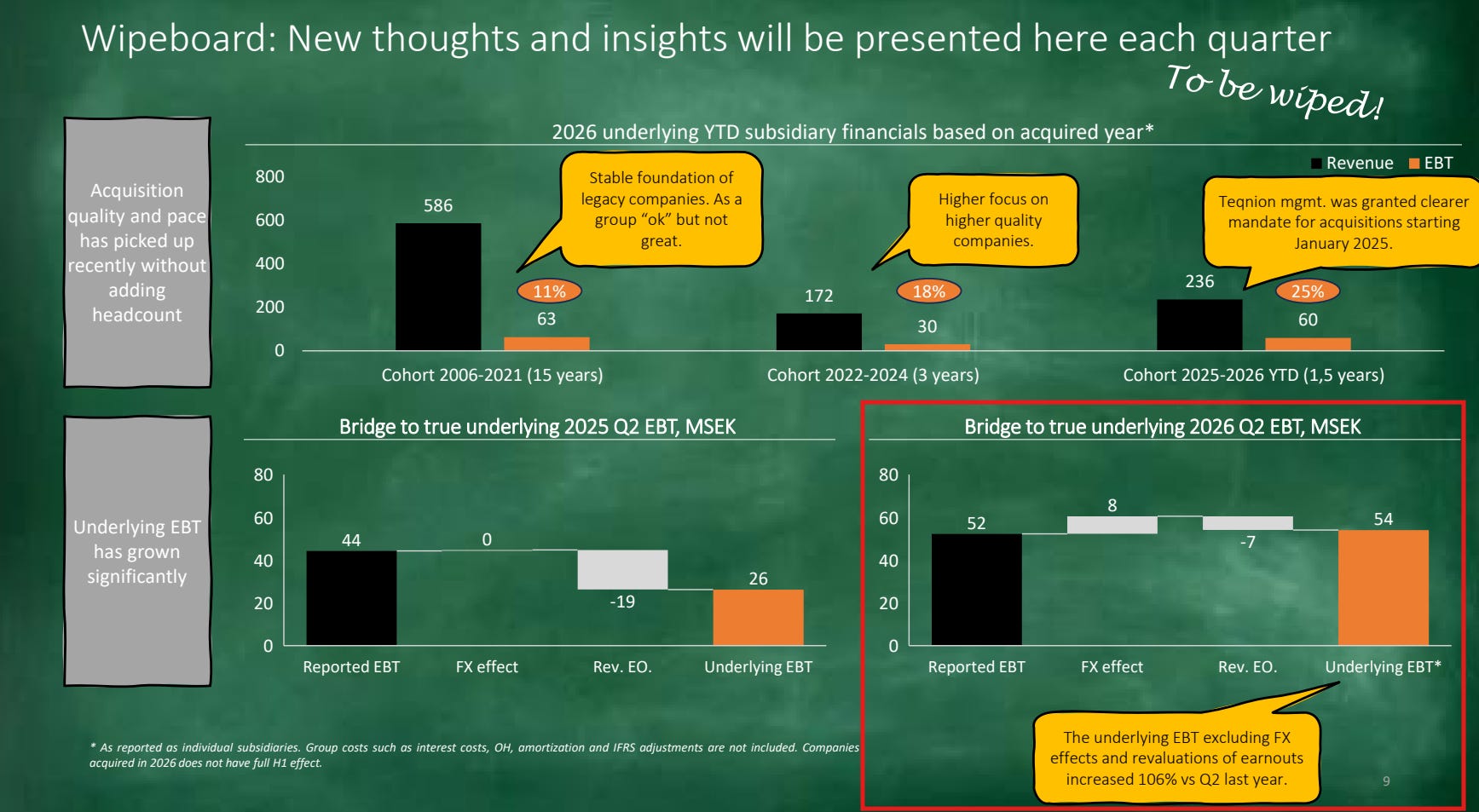
In other words, the improvement was not created by accounting noise. The underlying businesses earned substantially more money.
Less bad revenue, substantially more profit
Organic sales declined by 2.8%, which initially looks disappointing. But once again, the headline does not tell the full story.
In local currencies, the decline was only 1.0%. Excluding revenue that Teqnion deliberately discontinued because it was insufficiently profitable, organic sales were effectively flat at +0.3%.
More importantly, organic EBITA increased by 52% (after +13% in Q1).
This is the same development we saw in Q1: Teqnion is walking away from revenue that does not create sufficient value while improving the profitability of the remaining business.
Revenue growth is only valuable when it produces an adequate return. A company should not be rewarded for selling more products if those sales consume capital, management attention, and working capital without generating sufficient profit.
Teqnion describes itself as being in the business of generating profitable sales. The Q2 numbers increasingly reflect that philosophy.
Cash flow is beginning to follow earnings
Another important improvement was cash conversion.
Free cash flow excluding acquisitions increased from SEK 4.5m to SEK 35.0m in Q2. For the first half of the year, it more than doubled from SEK 23.0m to SEK 54.8m.
This is particularly welcome because earnings growth ultimately has to translate into cash. Serial acquirers cannot fund acquisitions indefinitely through increasing debt. The model becomes truly powerful when the existing portfolio generates enough cash to finance an increasing portion of future acquisitions.
There is still room for improvement. Working capital absorbed SEK 22.9m during the quarter and SEK 53.2m during the first half (though I’m not converned here). Gross cash flow—defined as operating cash flow before changes in working capital—nearly tripled from SEK 39m in H1 2025 to SEK 114m in H1 2026.
TEQ Nord: the recovery continues
The segment includes the subsidiaries in Sweden (25) and Finland (1).
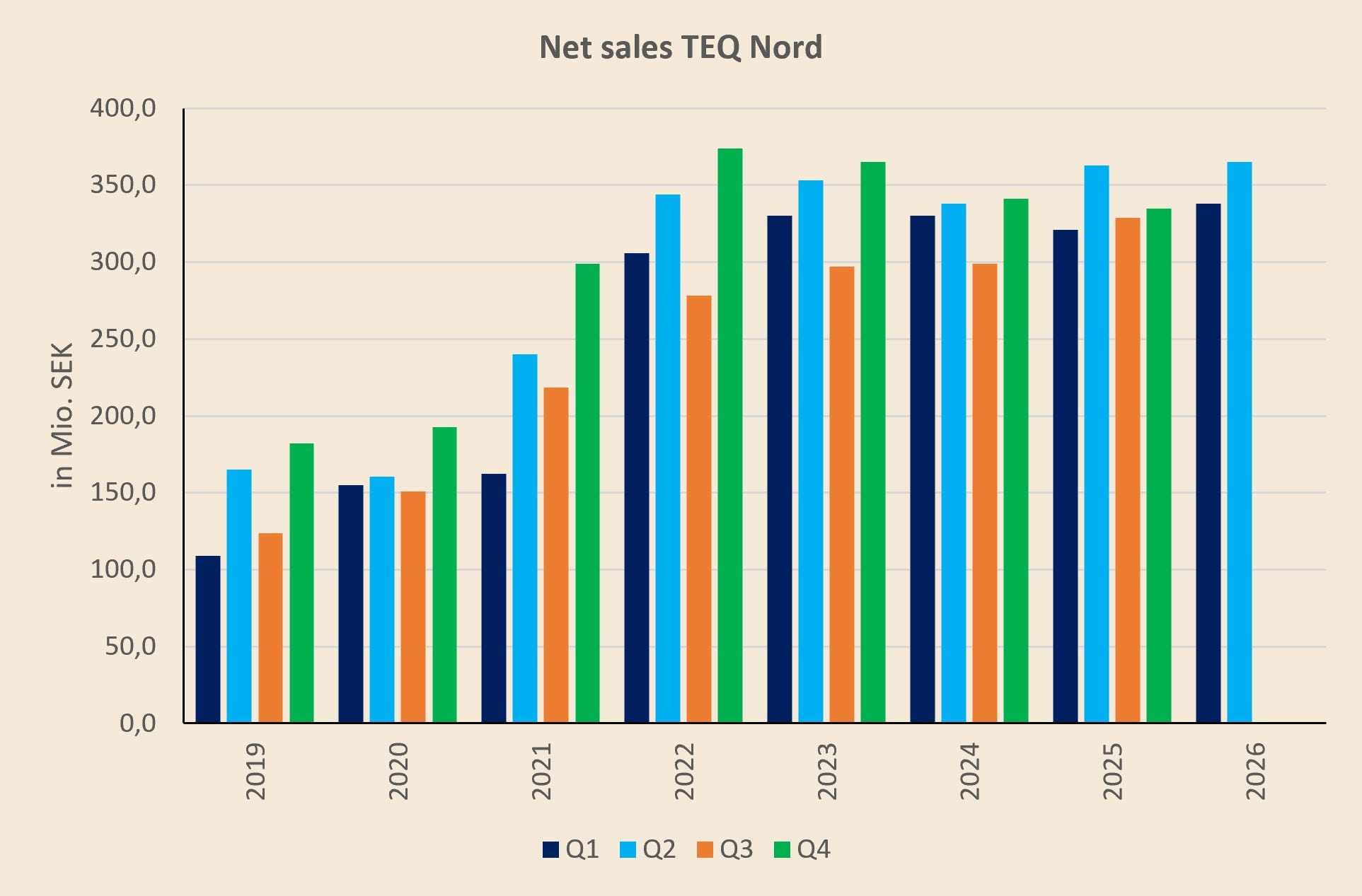
Net sales were broadly flat at SEK 365.0m, increasing by only 0.6%.
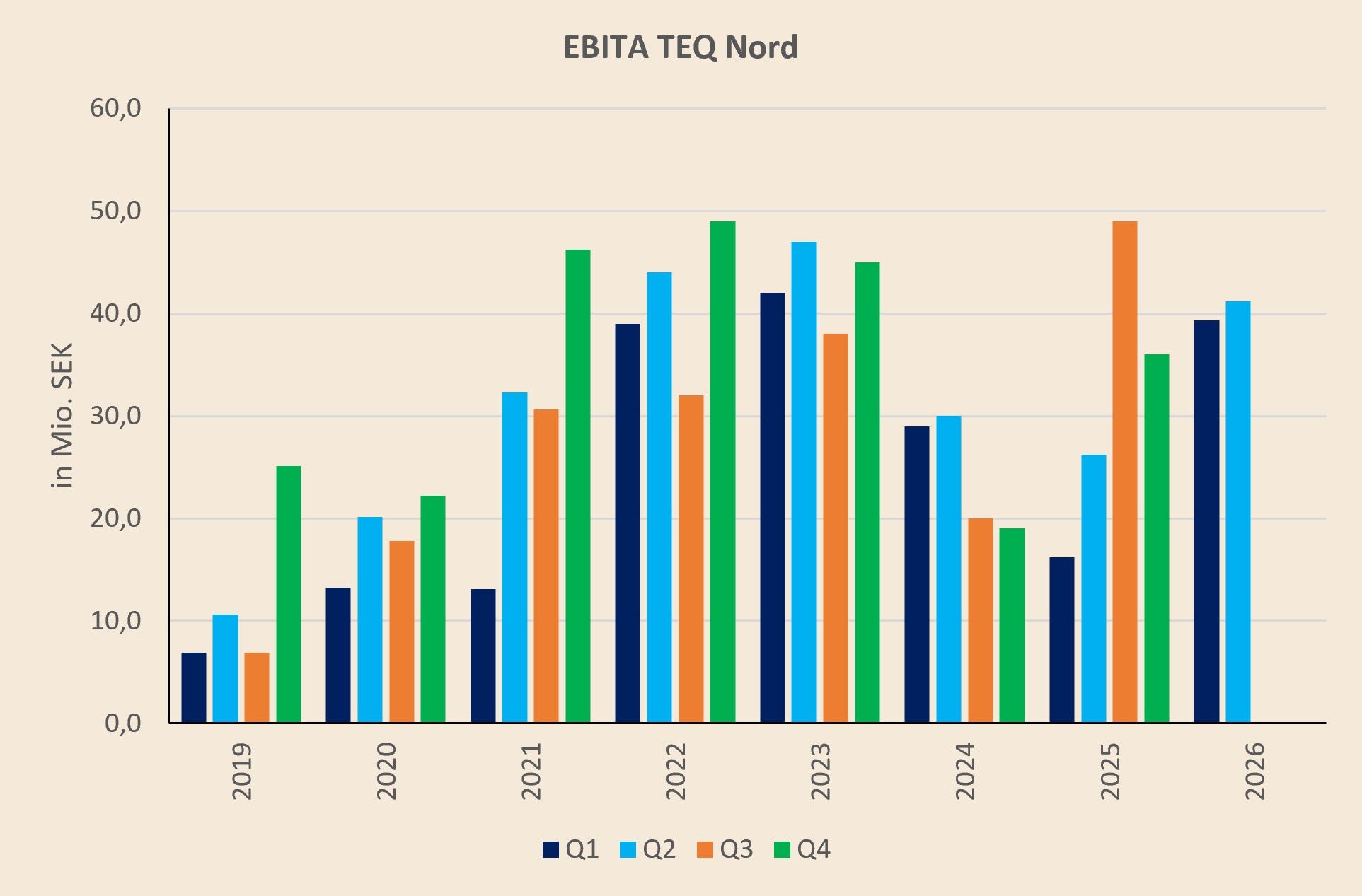
EBITA, however, increased by 55% from SEK 26.6m to SEK 41.2m.
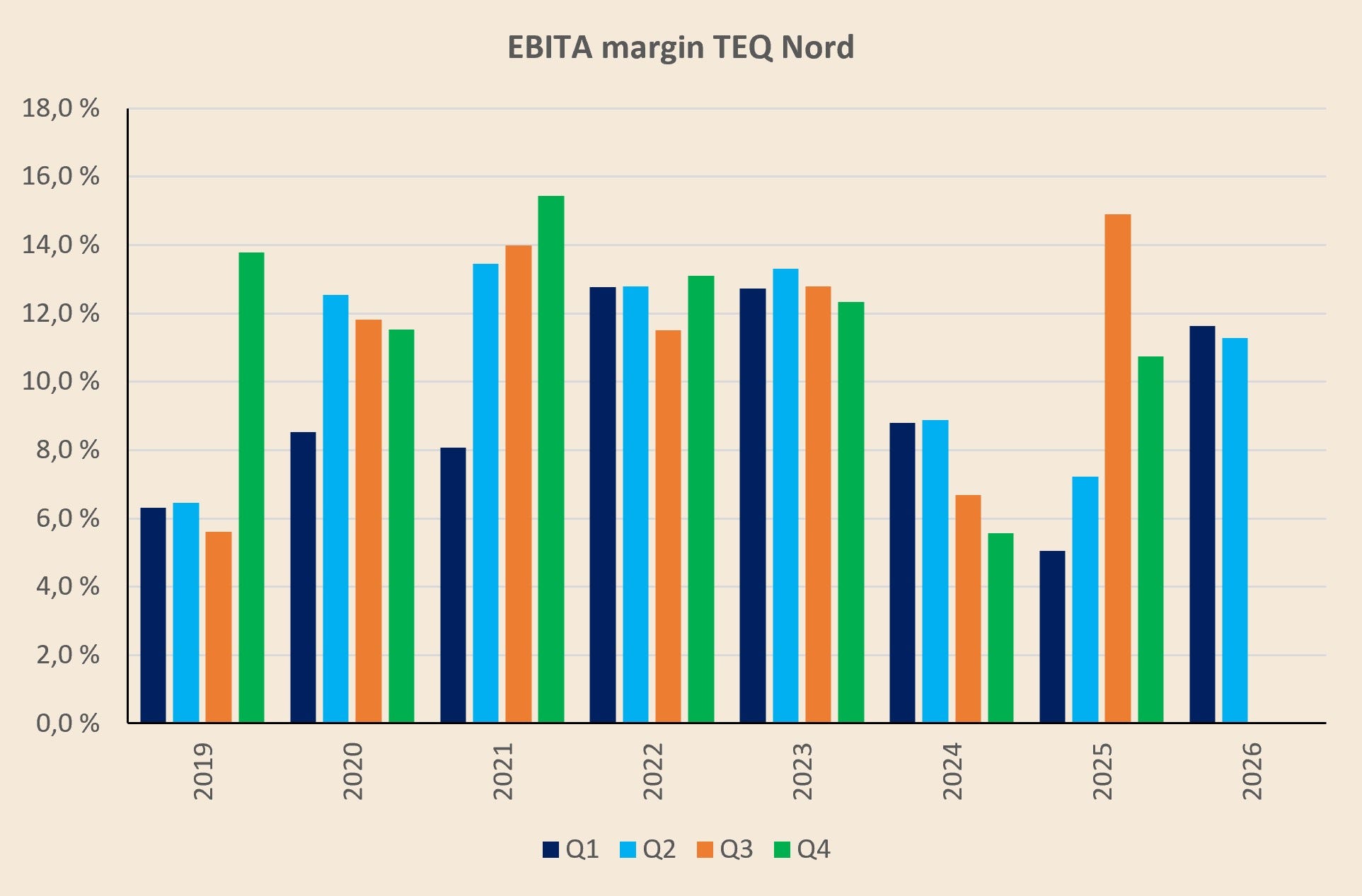
The margin improved from 7.3% to 11.3%, marking clear progress compared with 2024 and 2025. However, it remains below the level achieved in 2023 and well below the margins typically generated by larger Swedish serial acquirers such as Indutrade, Lagercrantz, Lifco, and Addtech. From a group perspective, TEQ Nord therefore remains the main drag on profitability, although I expect margins to improve gradually over time.
The underlying businesses are different, and many of the Swedish subsidiaries originate from an earlier phase in Teqnion’s development when acquisition quality and operational processes were less consistent.
TEQ Väst: growth remains strong
The segment includes the subsidiaries in the UK (16).
TEQ Väst continues to represent the structurally higher-quality part of the group.
Revenue increased by 37% to SEK 152.9m, driven primarily by acquisitions.
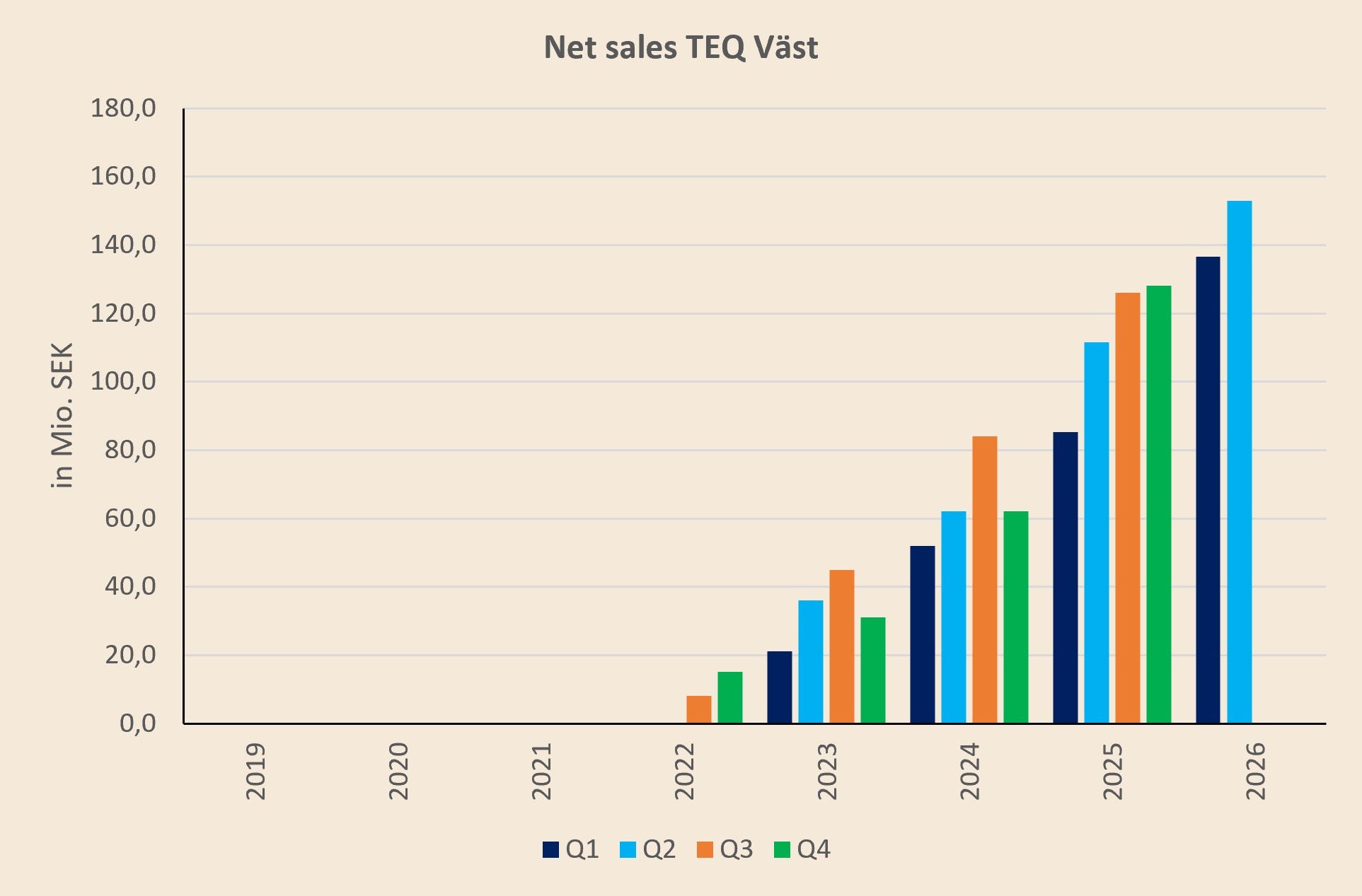
EBITA increased by 15% to SEK 38.4m.
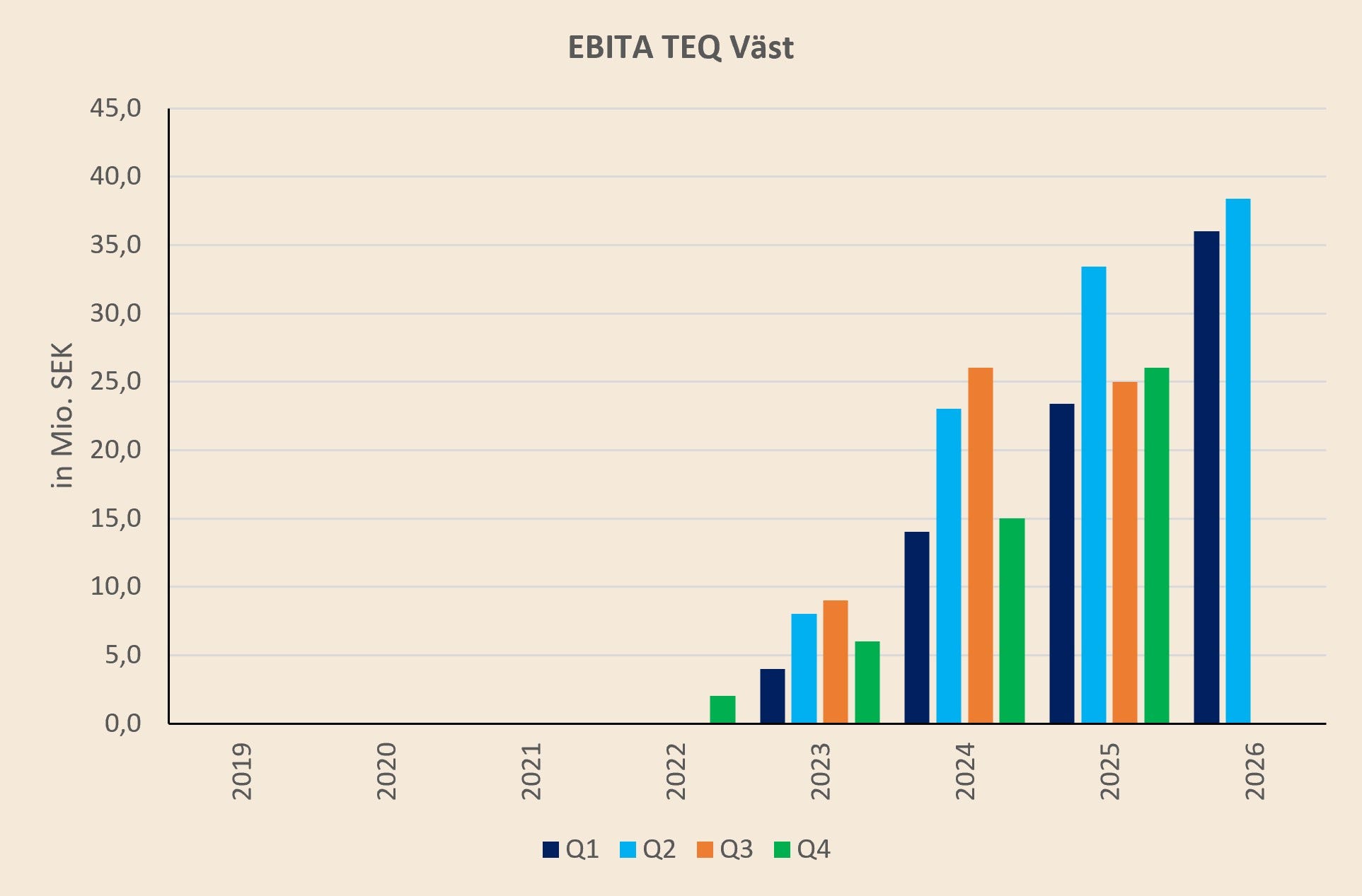
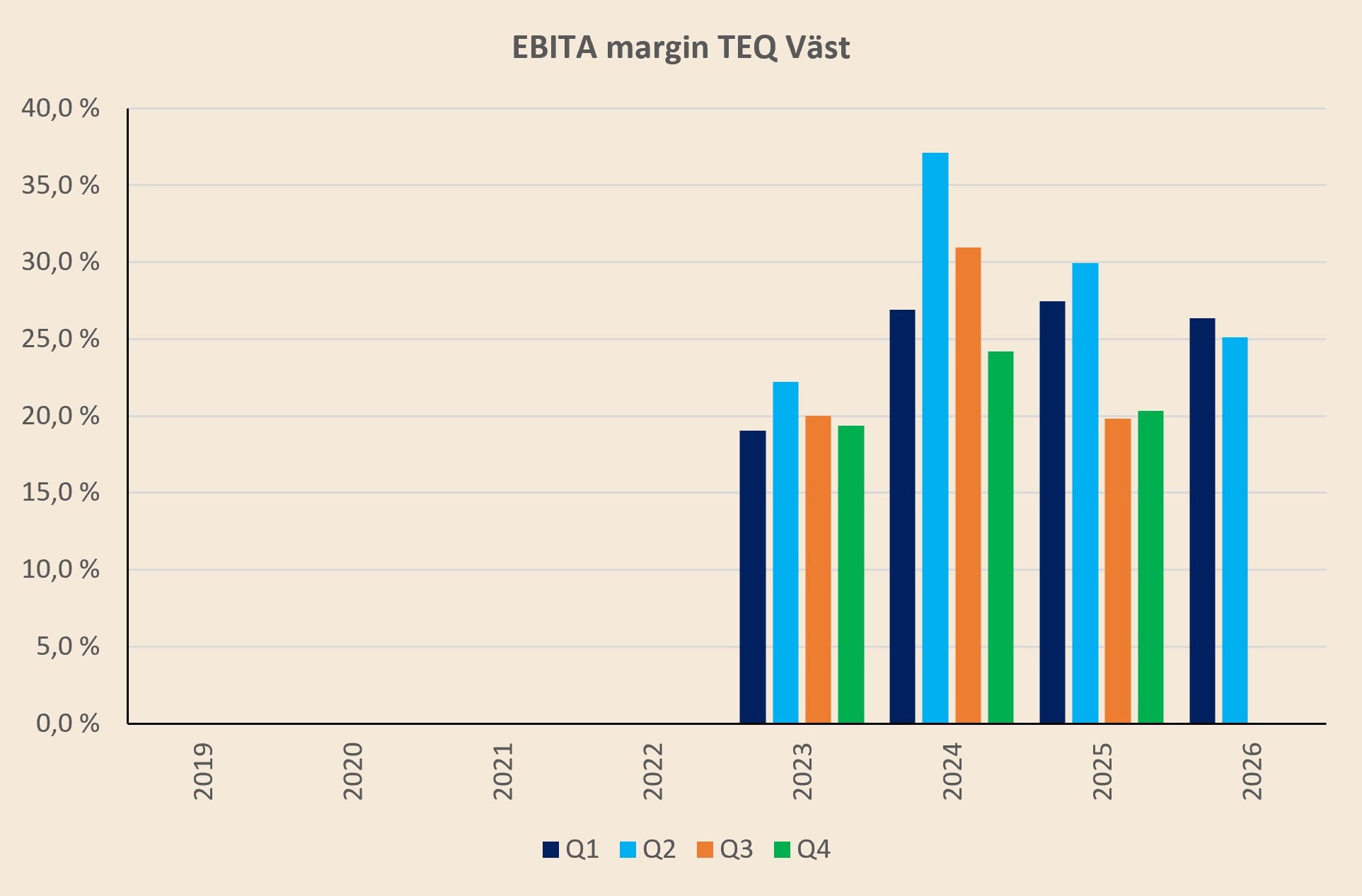
The EBITA margin declined from 29.9% to 25.1%, but the comparison period benefited from unusually favorable business and accounting items. A margin above 25% remains exceptional for a group of small industrial and service companies.
The Portfolio Mix Is Gradually Shifting
The sales and EBITA development illustrates how Teqnion’s portfolio is gradually changing.
TEQ Nord generated almost all group revenue before Teqnion began acquiring internationally. Since 2022, the majority of acquisitions have been completed in the UK and Ireland. As a result, TEQ Väst has grown from almost nothing to annualized sales of more than SEK 600m.
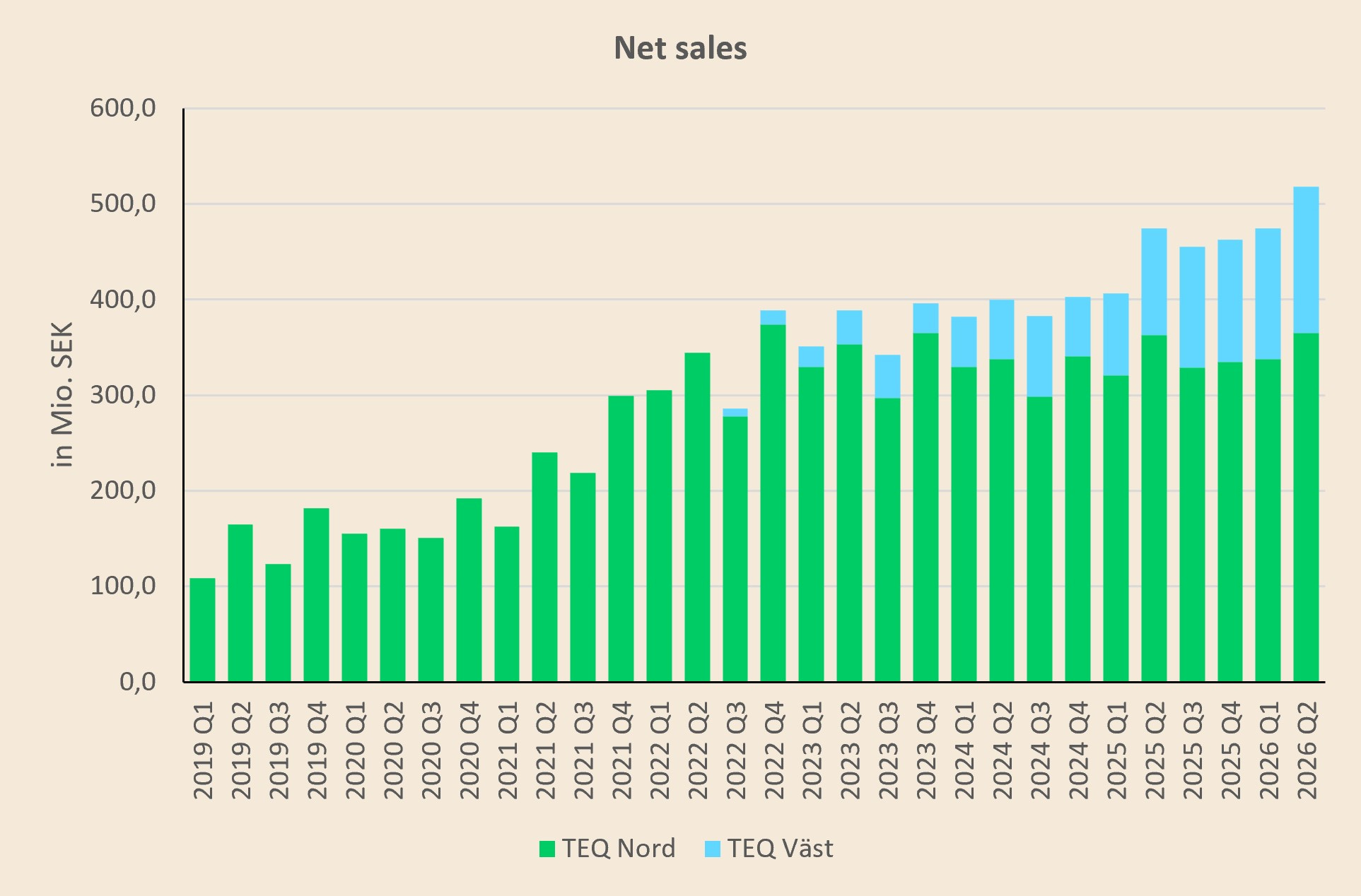
TEQ Väst still accounts for less than one-third of group sales, but already contributes nearly half of segment EBITA before central costs.
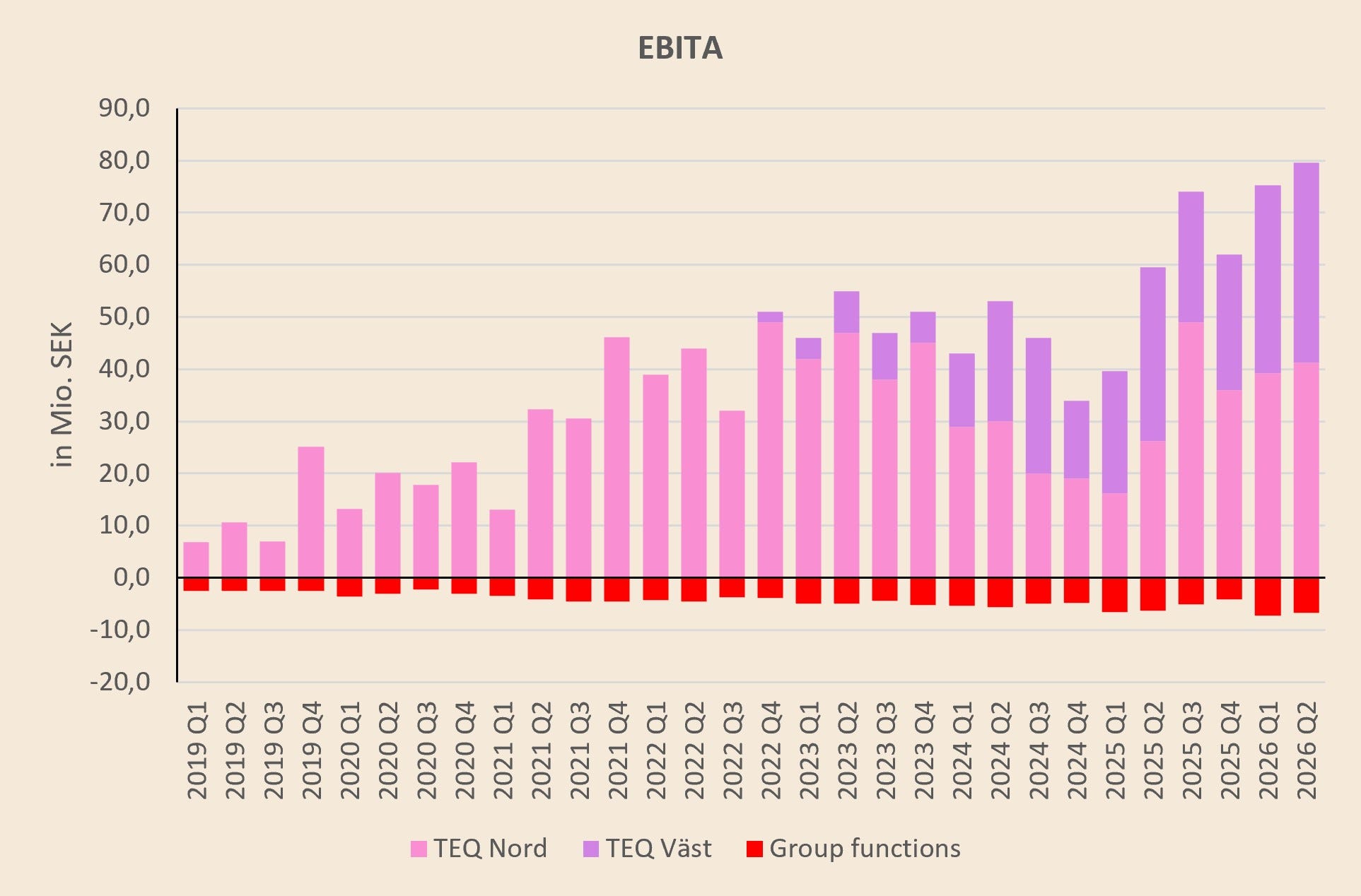
As Väst becomes a larger part of Teqnion, the group margin should structurally increase, even without assuming further margin expansion within Väst itself.
The first Finnish acquisition, Norband, has now also been allocated to TEQ Nord. This means that future growth in the higher-quality acquisition bucket will not necessarily be limited to Väst. However, I still expect the majority of Teqnion’s acquisition capital to be deployed in the UK.
The acquisition cohorts are getting better
One of the most interesting disclosures in the Q2 report was Teqnion’s new acquisition-cohort analysis.
Based on the underlying first-half subsidiary results, companies acquired between 2006 and 2021 generated an EBT margin of approximately 11%. The 2022–2024 cohort generated around 18%, while the businesses acquired in 2025 and 2026 generated approximately 25%.
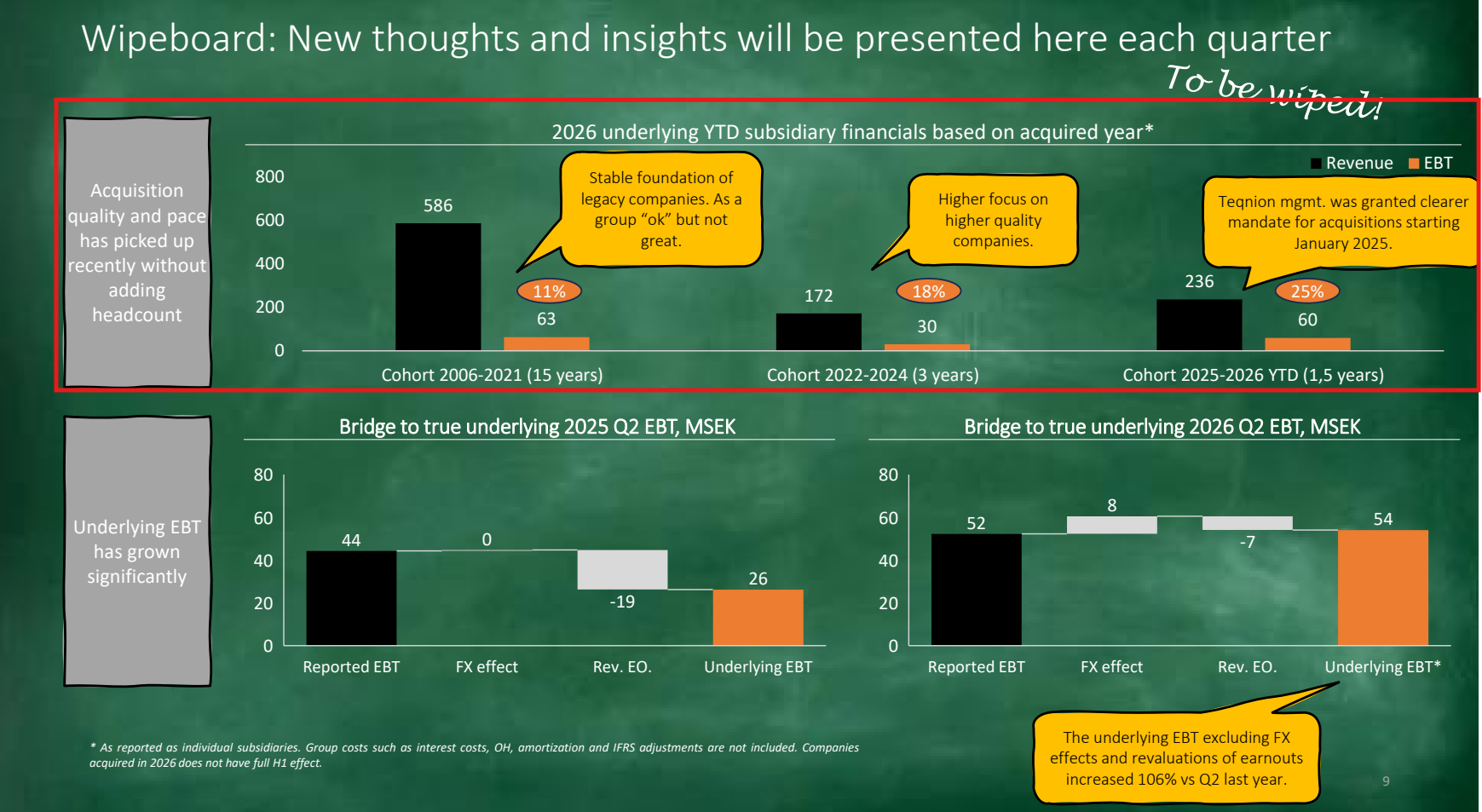
The figures are not perfectly comparable. The most recent acquisitions were not consolidated for the full period, there may be seasonality, and the calculation excludes central costs, financing costs, amortization, and IFRS adjustments.
Still, the direction is difficult to ignore.
The legacy portfolio provides a stable but relatively average foundation. The acquisitions completed between 2022 and 2024 are better. The most recent acquisitions appear better again.
This is precisely what management has been trying to achieve: acquire businesses that raise the average quality of the group rather than merely increase its size.
As Johan Steene summarized during the earnings call:
“The intention is that you’re going to see better and better margins and better and better earnings, and better and better sales.”
(Johan Steene, CEO, 2026 Q2 earnings call)
The cohort data provides the first tangible evidence that this process may already be underway.
The combination of a recovering legacy portfolio and increasingly profitable new acquisitions is powerful. Teqnion does not need to transform every old subsidiary into a 25%-margin business. It needs to improve the weaker companies while continuously allocating incremental capital toward companies that are better than the existing group average.
That is how the overall portfolio quality gradually compounds upward—something the stock market either has yet to fully understand or simply does not yet trust Teqnion to deliver.
M&A: attractive businesses at attractive prices
Teqnion completed four acquisitions during the first half: Cambs Compressor Engineering, the Powerair bolt-on, T.E.S.T., and Norband. The businesses have combined average historical sales of approximately SEK 100-110m.
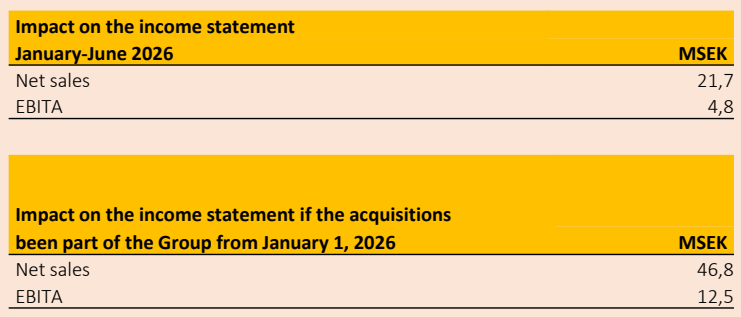
Total consideration amounted to SEK 130.5m. The acquired companies held SEK 23.7m of cash, resulting in a cash-free purchase price of approximately SEK 106.8m. Of the total consideration, SEK 85.0m was paid in cash at closing, while SEK 33.2m consisted of contingent consideration and SEK 12.3m of deferred payments.
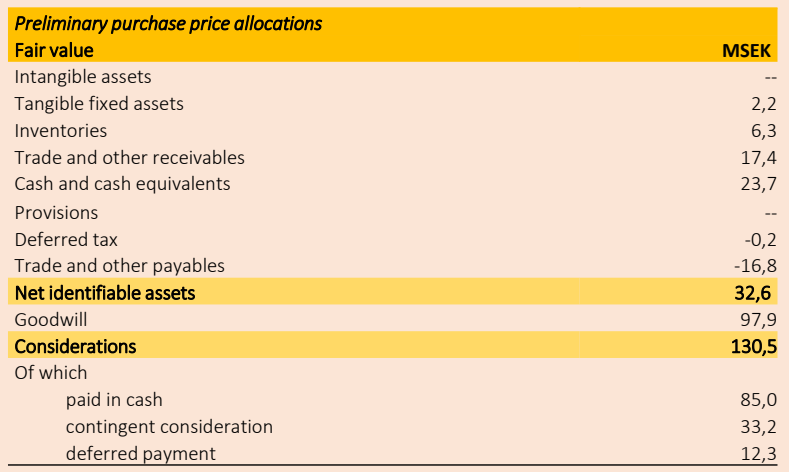
Had the acquired companies been part of Teqnion from January 1, they would have contributed SEK 46.8m of sales and SEK 12.5m of EBITA during the first half.
Annualizing these figures results in approximately SEK 25.0m of EBITA, implying a combined EBITA margin of almost 27%. This simple annualization may be affected by seasonality, but it provides a reasonable indication of the acquired earnings base.
Based on these figures:
The total consideration corresponds to approximately 5.2x EBITA.
The cash-free purchase price corresponds to approximately 4.3x EBITA.
The immediate net cash outflow of SEK 61.3m corresponds to approximately 2.5x EBITA.
That is attractive capital allocation and supports Teqnion’s goal of achieving a payback period of less than five years. In my view, the market significantly underappreciates Teqnion’s M&A engine: the company is effectively acquiring businesses with EBITA margins above 25% at approximately 4.3x EBITA—or just 2.5x EBITA based on the immediate net cash outflow.
Balance sheet and valuation
Net debt, including lease liabilities, increased to SEK 544.4m as Teqnion continued to acquire companies. Nevertheless, net debt to EBITDA remained moderate at 1.7x, compared with the company’s target of below 2.5x.
The balance sheet therefore still provides capacity for further acquisitions, although the growing amount of deferred and contingent consideration should not be ignored. These liabilities represent future cash payments, even though they are not included in traditional bank net debt.
The stock
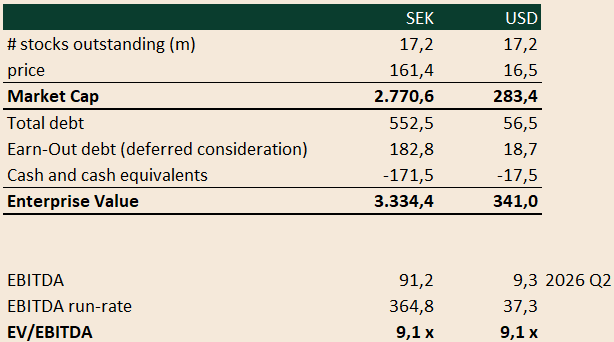
Teqnion’s market capitalization is approximately SEK 2.78bn. Adding bank debt and deferred consideration and deducting cash results in an enterprise value of around SEK 3.16bn.
Q2 EBITDA was approximately SEK 91.2m. Simply annualizing the quarter produces a run-rate EBITDA of around SEK 365m and an EV/EBITDA multiple of approximately 8.7x.
Conclusion
Q1 confirmed the thesis. Q2 strengthened it.
The legacy Swedish portfolio is recovering. TEQ Väst continues to grow at structurally higher margins. Organic profit is increasing despite deliberately abandoning unprofitable revenue. Cash flow has improved. The latest acquisition cohorts appear significantly more profitable than the older portfolio, and the disclosed purchase price math remains highly attractive, pointing to high ROIIC.
There will inevitably be weaker quarters. Teqnion is still a relatively small group, individual subsidiaries can have a meaningful impact on consolidated results, and operational improvement is rarely linear. But it is becoming increasingly difficult to argue that the recent progress is merely temporary in my opinion.
New to Slow Compounding?
I am a professional equity analyst and I publish deeply researched analyses of serial acquirers and other high-quality compounders, supported by extensive historical data. Subscribe for free to receive future company updates and Deep Dives directly in your inbox.
very much agree, hopefully the improving operational momentum continues. Nice to see the CEO just bought 40k shares at SEK175, equivalent to over 4x his base salary and c2.5x his total 2025 comp.